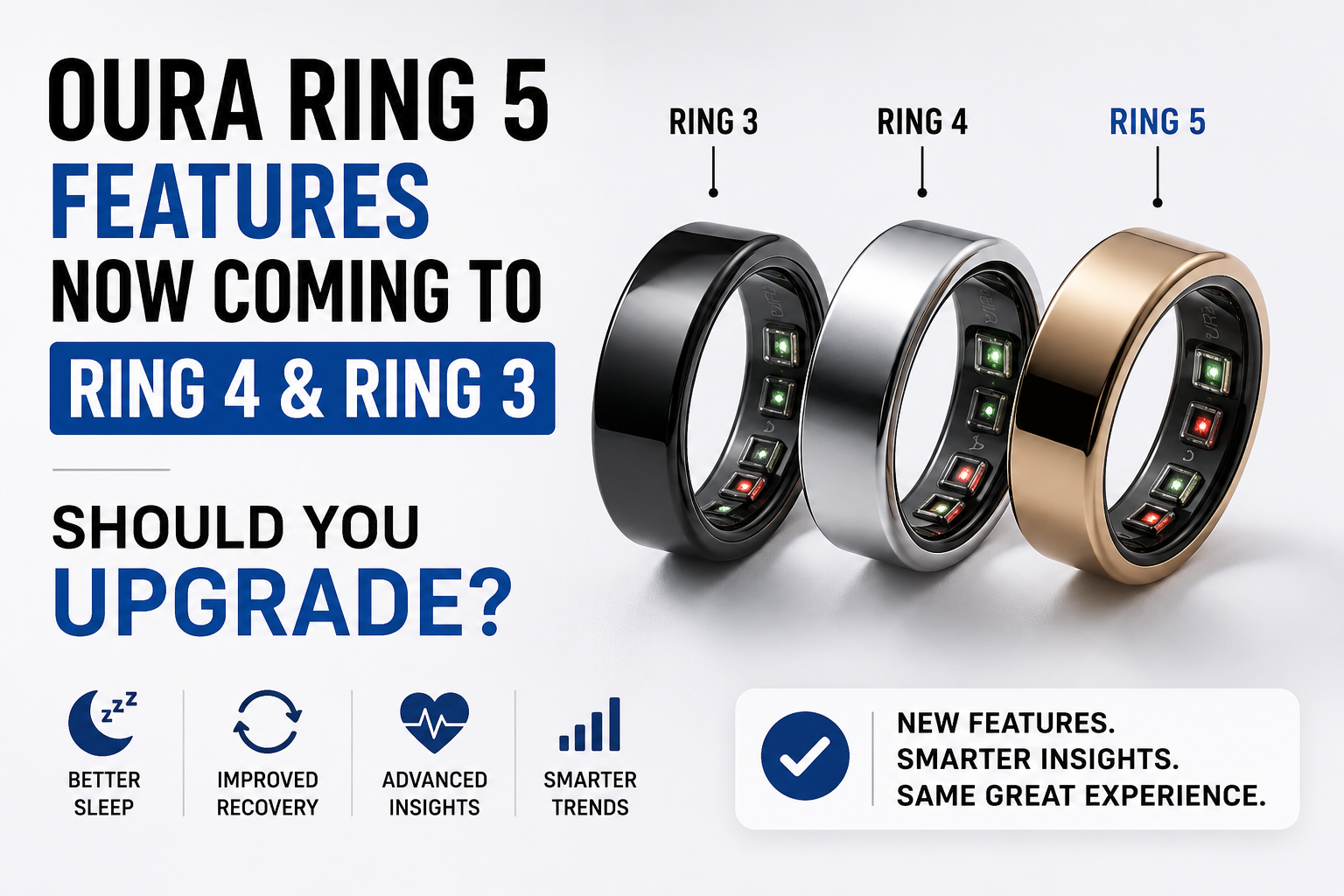
The wearable technology market continues to evolve rapidly, but one company has taken an approach that many users appreciate: improving older devices through software updates. After introducing the Oura Ring 5, Oura has confirmed that several of its latest software-powered features are also rolling out to Ring 4 and even Ring 3 users.
For existing customers, this raises an important question: Is upgrading to the Oura Ring 5 still worth it, or can you keep your current smart ring and enjoy most of the same experience?
The answer depends on what you value most. While software updates significantly narrow the gap, some hardware improvements simply cannot be delivered through firmware alone.
This guide explains everything you need to know.
Why Oura Is Updating Older Rings
Unlike many wearable manufacturers that reserve nearly every new feature for the latest hardware, Oura has increasingly focused on extending the life of previous generations.
Many health insights rely primarily on cloud-based AI algorithms rather than entirely new sensors. As these algorithms improve, older devices can often benefit from smarter analysis without requiring new hardware.
This strategy offers several advantages:
- Better customer satisfaction
- Longer product lifespan
- Less electronic waste
- Improved subscription value
- Increased trust in the ecosystem
For users, this means buying an Oura Ring becomes a longer-term investment rather than something that feels outdated after one product cycle.
New Ring 5 Features Rolling Out to Ring 4 and Ring 3
Although not every feature is being shared, several headline additions are now becoming available through software updates.
1. Smarter Sleep Analysis
Sleep tracking remains Oura’s biggest strength.
Older rings are receiving:
- Improved sleep stage detection
- Better REM estimation
- More accurate deep sleep calculations
- Enhanced sleep efficiency scoring
- Improved bedtime recommendations
Instead of changing the sensors themselves, Oura has refined how collected data is interpreted.
The result is more personalized nightly insights.
2. Better Recovery Scores
Recovery has become increasingly important for athletes and everyday users alike.
Updated recovery algorithms now include:
- Daily stress adaptation
- Resting heart rate trends
- Previous activity load
- Sleep quality
- Recovery readiness forecasting
These improvements make the daily Readiness Score more accurate than before.
3. Enhanced Activity Intelligence
Ring 3 and Ring 4 users now receive more detailed activity recommendations.
New improvements include:
- Better workout recognition
- Improved calorie estimation
- Adaptive activity goals
- More personalized movement reminders
- Improved inactivity detection
Instead of using generic targets, recommendations become increasingly tailored over time.
4. AI Health Insights
One of the biggest additions is smarter AI-powered interpretation.
Rather than only showing raw numbers, Oura now provides:
- Trend explanations
- Recovery suggestions
- Sleep coaching
- Lifestyle recommendations
- Weekly health summaries
This makes the app much easier to understand, especially for new users.
5. Improved Stress Tracking
Stress detection has become more sophisticated.
New updates improve:
- Daytime stress recognition
- Relaxation tracking
- Physiological stress trends
- Recovery windows
- Daily resilience insights
These improvements rely heavily on software rather than new hardware.
6. Better Cycle Tracking
Women’s health tracking has also improved.
Updates include:
- More accurate cycle predictions
- Better symptom logging
- Improved fertility estimation
- Enhanced hormonal trend analysis
Many of these improvements are driven by machine learning models rather than hardware upgrades.
7. Personalized Health Trends
Instead of isolated daily scores, Oura now focuses more on long-term trends.
Users can better understand:
- Weekly recovery patterns
- Monthly sleep quality
- Activity consistency
- Heart rate trends
- Lifestyle changes
These insights become increasingly useful after several months of wear.
Which Features Remain Exclusive to Ring 5?
Despite the generous software updates, some upgrades still require the newest hardware.
Ring 5 continues to offer exclusive benefits such as:
New Sensor Hardware
If Ring 5 includes improved optical sensors, users may receive:
- Higher signal quality
- Better heart rate accuracy
- Improved blood oxygen readings
- Enhanced motion tracking
These improvements cannot simply be added through software.
Faster Processing
New onboard processors enable:
- Quicker data collection
- Lower battery usage
- Faster syncing
- More responsive performance
Better Battery Life
Battery improvements are typically hardware-based.
Ring 5 users may enjoy:
- Longer runtime
- Faster charging
- Better battery health over years of use
Improved Comfort
Hardware redesigns may include:
- Better sizing
- Reduced thickness
- Lower weight
- Improved durability
These quality-of-life improvements matter for a device designed to be worn 24/7.
Ring 3 vs Ring 4 vs Ring 5
| Feature | Ring 3 | Ring 4 | Ring 5 |
|---|---|---|---|
| Sleep Tracking | Excellent | Better | Best |
| Recovery Score | Updated | Updated | Latest |
| AI Health Insights | Yes | Yes | Full Experience |
| Activity Tracking | Improved | Improved | Best Accuracy |
| Stress Tracking | Updated | Updated | Most Accurate |
| Battery Life | Good | Better | Best |
| Hardware Sensors | Older | Newer | Latest |
| Long-Term Support | Good | Excellent | Longest |
Should Ring 3 Owners Upgrade?
If your Ring 3 still performs well, the latest software updates make upgrading less urgent.
You should consider upgrading if:
- Your battery has noticeably degraded.
- You want the latest sensors.
- You value the highest possible accuracy.
- You wear your ring every day for health tracking.
- Your current ring is several years old or damaged.
Otherwise, Ring 3 remains a capable smart ring for most users.
Should Ring 4 Owners Upgrade?
For Ring 4 users, the decision is even easier.
Because many Ring 5 software features are arriving on Ring 4, most users can comfortably keep their existing device.
Upgrading mainly makes sense if you want:
- The newest hardware
- Longer battery life
- Slightly improved sensor accuracy
- Future-proof hardware support
For many people, Ring 4 will continue to provide an excellent experience after the latest updates.
Who Should Definitely Buy Ring 5?
The newest model is ideal for:
- Serious athletes
- Biohackers
- Professional trainers
- Users replacing a Ring 2 or older device
- People buying their first smart ring
New buyers benefit from the latest hardware while also receiving future software improvements for years to come.
Is Oura Becoming More Consumer-Friendly?
One notable trend is Oura’s willingness to extend premium features beyond the newest device. Rather than forcing upgrades every year, the company is strengthening its ecosystem by delivering meaningful software enhancements to existing users.
This approach encourages long-term customer loyalty and makes the subscription feel more valuable, since improvements continue even after the initial purchase.
For consumers, it’s a welcome shift that stands out in a market where many wearable brands limit new capabilities to their latest hardware.
Should You Upgrade?
The latest rollout of Oura Ring 5 features to Ring 4 and Ring 3 changes the upgrade equation significantly. If you already own a Ring 4—or even a well-functioning Ring 3—you’ll gain many of the newest health insights without buying new hardware.
Upgrading to Ring 5 still makes sense if you want the most advanced sensors, better battery life, and the highest tracking accuracy available. However, for most existing users, the software improvements mean there’s less pressure to replace a device that still works well.
If your current ring meets your needs, keeping it is a sensible choice. If you’re entering the Oura ecosystem for the first time or your older ring is showing its age, Ring 5 remains the strongest option thanks to its latest hardware and longer-term support.
Frequently Asked Questions (FAQs)
1. Does Ring 3 get Ring 5 features?
Yes. Several software-based features, including improved sleep analysis, recovery insights, activity intelligence, and AI-powered health summaries, are being rolled out to Ring 3 where supported by the hardware.
2. Are all Ring 5 features coming to older models?
No. Hardware-dependent improvements, such as newer sensors, battery enhancements, and other physical upgrades, remain exclusive to Ring 5.
3. Is Oura Ring 5 worth upgrading to from Ring 4?
For most Ring 4 users, the latest software updates reduce the need to upgrade. Ring 5 is most worthwhile if you want the newest hardware, improved battery life, and maximum tracking accuracy.
4. Will software updates improve tracking accuracy?
Yes. Oura regularly refines its algorithms, which can improve sleep tracking, recovery scores, stress detection, and activity insights even on older compatible devices.