Meta AI Performance Reviews: Engineers Will Now Be Judged by Results, Not AI Usage
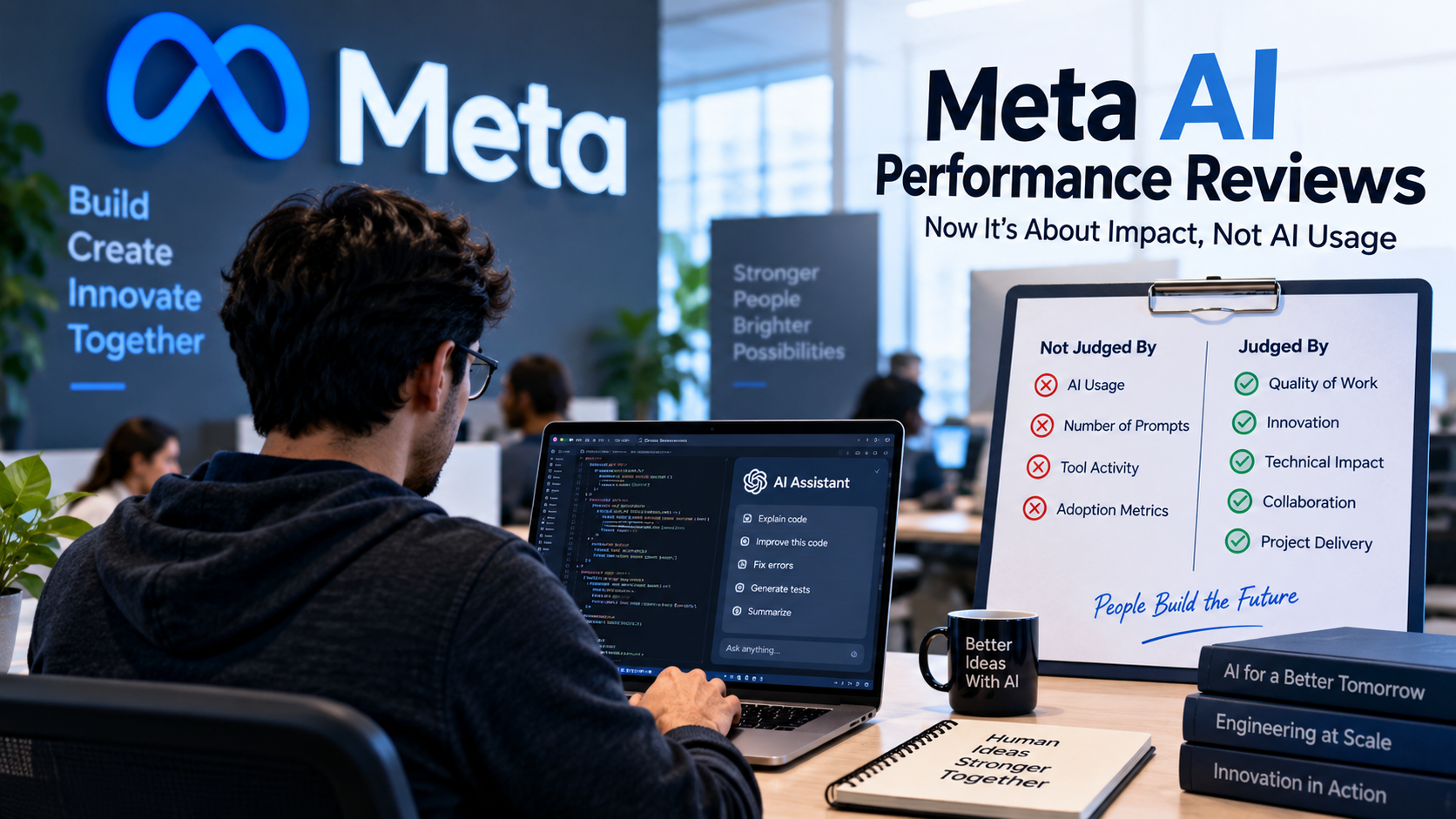
Meta AI Performance Reviews have taken an important turn after the company reportedly informed engineers that performance evaluations will no longer depend on how frequently they use artificial intelligence tools. The move marks a significant shift from Meta’s earlier push to encourage AI adoption across engineering teams. Instead of tracking AI usage, managers will now focus on what truly matters—high-quality work, innovation, technical impact, and successful project delivery.
The change comes at a time when AI coding assistants are becoming a regular part of software development. While these tools can improve productivity, Meta now believes they should support engineers rather than become a performance metric.
Meta Changes Its AI Evaluation Strategy

Earlier this year, Meta encouraged software engineers to make AI tools a regular part of their workflow. Internal teams were reportedly given dashboards that measured AI adoption, and some employees believed these numbers could influence performance reviews.
However, according to recent reports, company executives have clarified that AI usage alone will not determine employee ratings. Instead, engineering managers have been instructed to evaluate developers based on the quality of their work, technical complexity, collaboration, and business impact.
This decision reflects a more balanced approach to integrating AI into the workplace. While Meta still wants employees to embrace AI-powered tools, it no longer wants engineers to feel pressured into using them simply to improve internal metrics.
Why Meta Introduced AI Usage Metrics
Like many technology companies, Meta has invested billions of dollars in artificial intelligence. CEO Mark Zuckerberg has repeatedly emphasized that AI will play a central role in the company’s future products, infrastructure, and software development.
To speed up adoption, Meta encouraged engineers to experiment with AI coding assistants for writing code, debugging applications, generating documentation, and improving productivity. The goal was to help teams complete tasks faster while allowing developers to focus on solving more complex engineering problems.
As AI tools became more widely available, internal tracking systems were introduced to understand how frequently employees were using these technologies.
Why the Company Changed Its Mind
Although AI usage increased, the strategy also raised concerns among employees. Some engineers reportedly worried that they were being evaluated based on AI activity instead of actual engineering performance.
Industry observers also noted that measuring AI usage could encourage employees to use AI unnecessarily just to improve their statistics rather than because it genuinely helped their work.
By removing AI usage from performance reviews, Meta is attempting to reduce this pressure and encourage more meaningful adoption of AI. Employees can now decide when AI tools genuinely improve their workflow instead of feeling obligated to use them for every task.
What This Means for Engineers
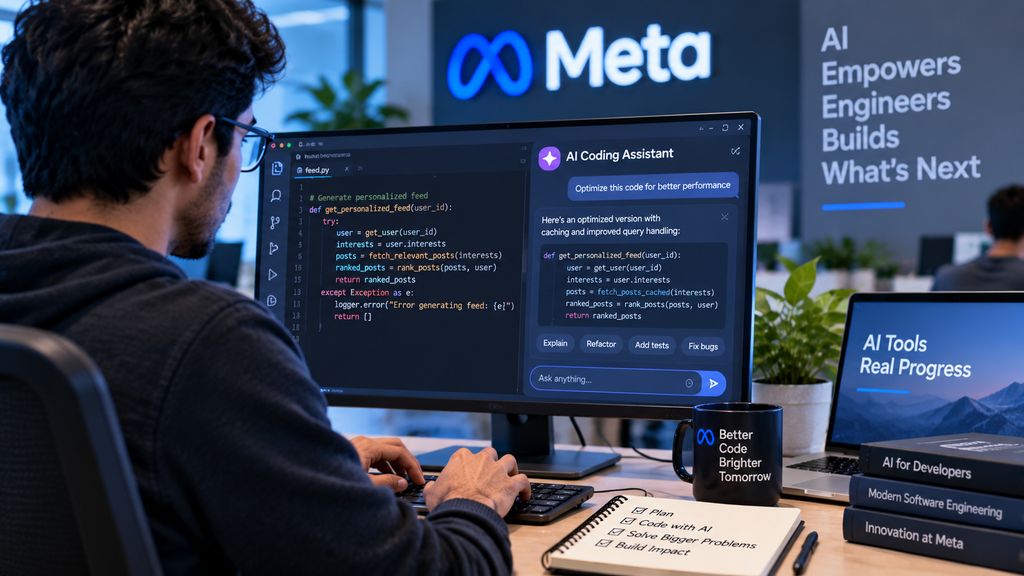
The updated Meta AI Performance Reviews policy sends a clear message that artificial intelligence should remain a productivity tool rather than a replacement for engineering skills.
Developers will continue using AI for repetitive coding tasks, debugging, documentation, and brainstorming solutions. However, their career growth will depend on traditional performance indicators such as software quality, collaboration, problem-solving ability, innovation, and project outcomes.
This approach is likely to create a healthier work environment where engineers can choose the right balance between human expertise and AI assistance.
How Meta Compares With Other Tech Companies
Meta is not the only company encouraging AI adoption. Microsoft, Google, Amazon, and Shopify have all introduced AI-powered coding assistants to help developers become more productive.
The difference is that most technology companies continue to emphasize outcomes over tool usage. Meta’s latest policy aligns more closely with this broader industry trend by rewarding engineers for delivering valuable products instead of simply recording how often they interact with AI.
As generative AI becomes a permanent part of software development, companies are expected to focus less on measuring AI activity and more on how effectively employees combine AI with their own technical expertise.
Final Thoughts
The latest Meta AI Performance Reviews update represents a practical shift in how one of the world’s largest technology companies views artificial intelligence in the workplace. Rather than rewarding engineers for the number of AI prompts they generate, Meta now wants managers to evaluate real business impact, engineering quality, and innovation.
The policy highlights an important lesson for the entire technology industry: AI is most valuable when it helps people produce better work—not when it becomes the work itself. As organizations continue investing in artificial intelligence, finding the right balance between automation and human expertise will remain one of the biggest challenges for modern software development.
Suggested Featured Image Alt Text: Meta AI Performance Reviews
Suggested Mid-Article Image 1 Alt Text: Meta AI Performance Reviews engineering team
Suggested Mid-Article Image 2 Alt Text: Meta AI Performance Reviews AI coding assistant
External DoFollow Links:
Internal Link Suggestions:
- AI News →
/artificial-intelligence/ - Tech News →
/tech-news/ - Reviews →
/reviews-buying-guides/