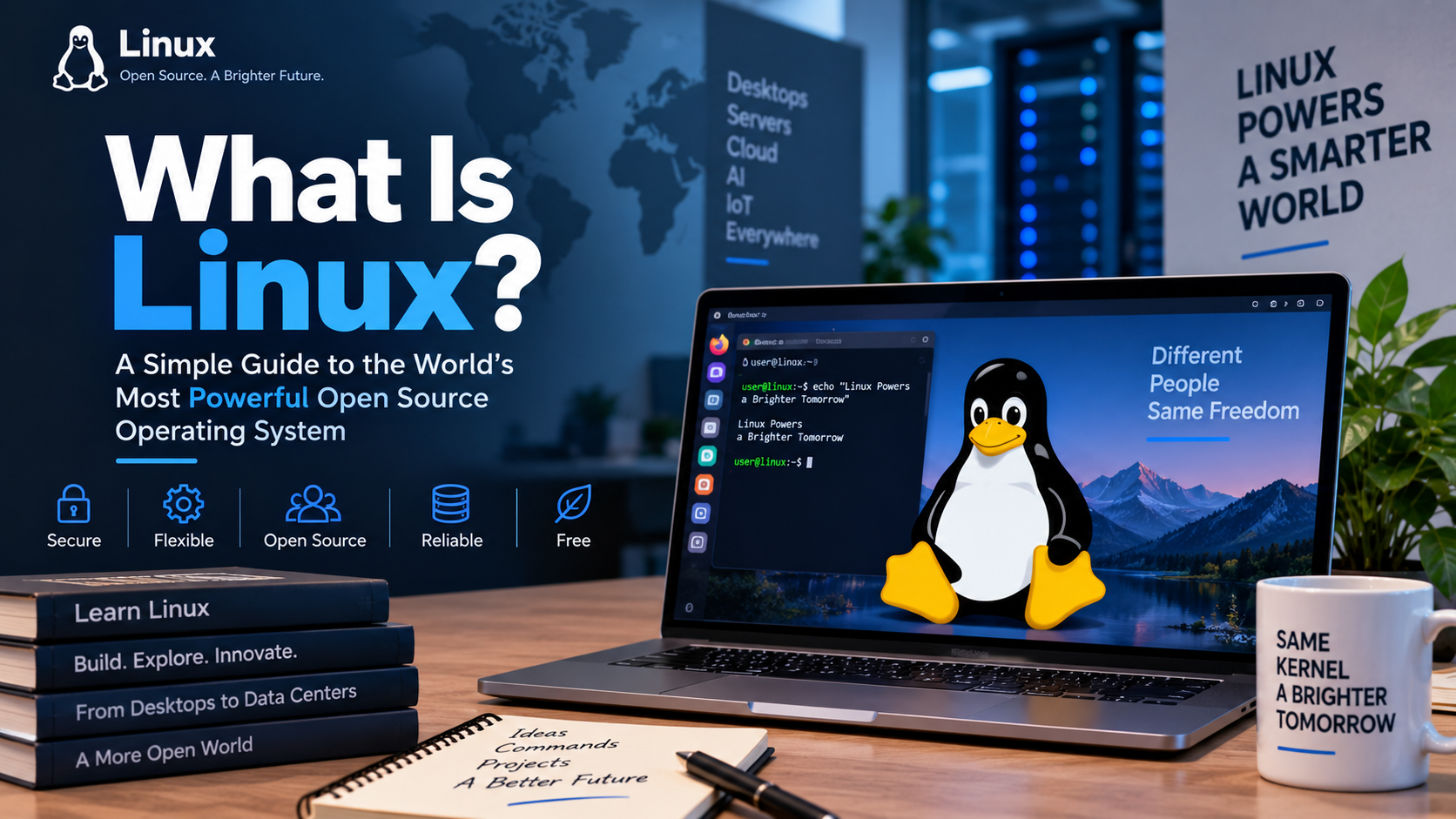
Linux is one of the most powerful and widely used operating systems in the world, yet many people don’t realize how often they use it. From Android smartphones and smart TVs to cloud servers, supercomputers, and even cars, Linux powers billions of devices every day. If you’ve ever wondered what is Linux, how it works, and why developers, businesses, and tech enthusiasts love it, this guide will help you understand everything in simple terms.
What Is Linux?
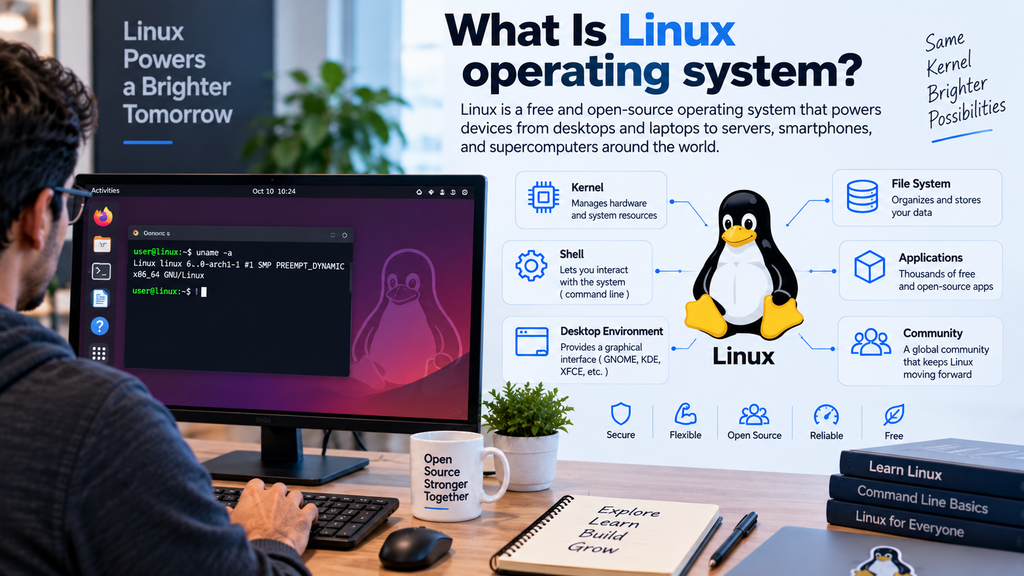
What Is Linux? Linux is a free and open-source operating system based on the Linux kernel, which was created by Finnish software engineer Linus Torvalds in 1991. An operating system is the software that connects your computer’s hardware with the applications you use every day.
Unlike proprietary operating systems such as Windows or macOS, Linux allows anyone to view, modify, and distribute its source code. This open-source approach has created a global community of developers who continuously improve the operating system, making it more secure, stable, and reliable.
Today, Linux powers Android smartphones, web servers, cloud computing platforms, IoT devices, gaming consoles, smart home products, and the majority of the world’s fastest supercomputers.
How Does Linux Work?
The Linux operating system consists of several important components that work together to provide a smooth computing experience.
At its core is the Linux Kernel, which manages the processor, memory, storage devices, and hardware communication. During startup, a bootloader loads the kernel into memory before the system initializes services and applications.
Linux also includes background services called daemons, desktop environments like GNOME and KDE Plasma, command-line tools, and thousands of free applications available through software repositories.
One of Linux’s biggest strengths is that users can choose how they want to interact with the operating system. Beginners can use an easy graphical interface, while advanced users can control everything through the command line.
Why Is Linux So Popular?
Linux has become one of the most trusted operating systems because it offers several advantages over traditional operating systems.
The biggest advantage is that Linux is completely free to download and install. There are no licensing fees, making it an excellent choice for individuals, businesses, schools, and governments.
Security is another major reason why millions of people choose Linux. The operating system has a strong permission system, regular security updates, and is less vulnerable to malware compared to many other platforms.
Linux is also known for its outstanding stability. Many Linux servers run continuously for months or even years without requiring a restart, making it the preferred operating system for web hosting companies and enterprise data centers.
Another reason behind Linux’s popularity is its flexibility. Users can customize almost every aspect of the operating system, from the desktop appearance to system performance and installed software.
Popular Linux Distributions
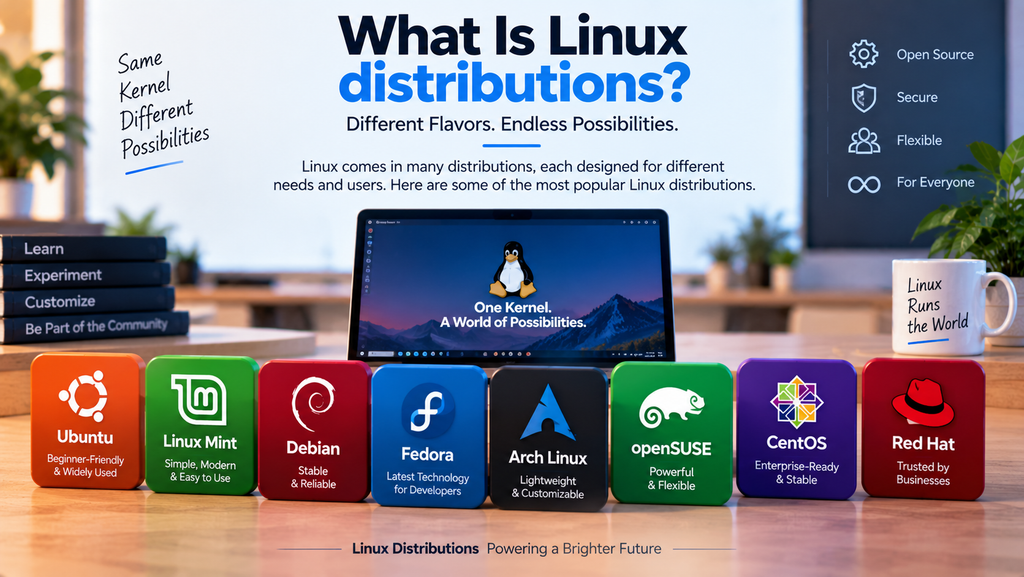
Linux comes in many different versions, known as distributions or distros. Each distribution is designed for a specific type of user.
Ubuntu is one of the most beginner-friendly Linux distributions and is widely recommended for new users.
Linux Mint offers a familiar desktop experience that feels similar to Windows, making it an excellent option for users switching from Microsoft’s operating system.
Fedora provides the latest software technologies and is popular among developers.
Debian is known for its stability and forms the foundation of many other Linux distributions.
Advanced users often choose Arch Linux, while enterprise businesses rely on Red Hat Enterprise Linux (RHEL) and SUSE Linux Enterprise for mission-critical workloads.
Linux vs Windows
Choosing between Linux and Windows depends on your requirements.
Windows is popular for gaming, commercial software, and general home use, while Linux excels in development, cybersecurity, cloud computing, programming, and servers.
Linux typically consumes fewer system resources, allowing older computers to perform better. It also gives users complete control over the operating system without unnecessary background services or advertising.
Developers also prefer Linux because it includes built-in programming tools, package managers, and excellent support for Docker, Kubernetes, Python, Java, and other development technologies.
How to Get Started with Linux
Getting started with Linux is easier than ever. Most Linux distributions provide a live USB feature, allowing users to test the operating system without installing it on their computer.
If you’re new to Linux, Ubuntu or Linux Mint are excellent starting points. Their installation process is straightforward, and both include user-friendly software stores where applications can be installed with just a few clicks.
There are also thousands of free tutorials, documentation pages, and active online communities ready to help beginners learn Linux step by step.
Final Thoughts
If you’ve been wondering what is Linux, the answer is simple: it’s a powerful, secure, flexible, and open-source operating system trusted by millions of users worldwide. Whether you’re a student, software developer, business owner, or someone looking to breathe new life into an old computer, Linux offers an impressive combination of performance, security, and freedom.
As technology continues to evolve, Linux remains at the heart of cloud computing, artificial intelligence, cybersecurity, and modern software development. Learning Linux today is not just a valuable technical skill—it’s an investment in your future.
DoFollow External Links
- https://www.kernel.org/
- https://www.linuxfoundation.org/
- https://ubuntu.com/
- https://www.redhat.com/
- https://www.debian.org/
Internal Link Suggestions:
- AI News →
/artificial-intelligence/ - Tech News →
/tech-news/ - Reviews →
/reviews-buying-guides/