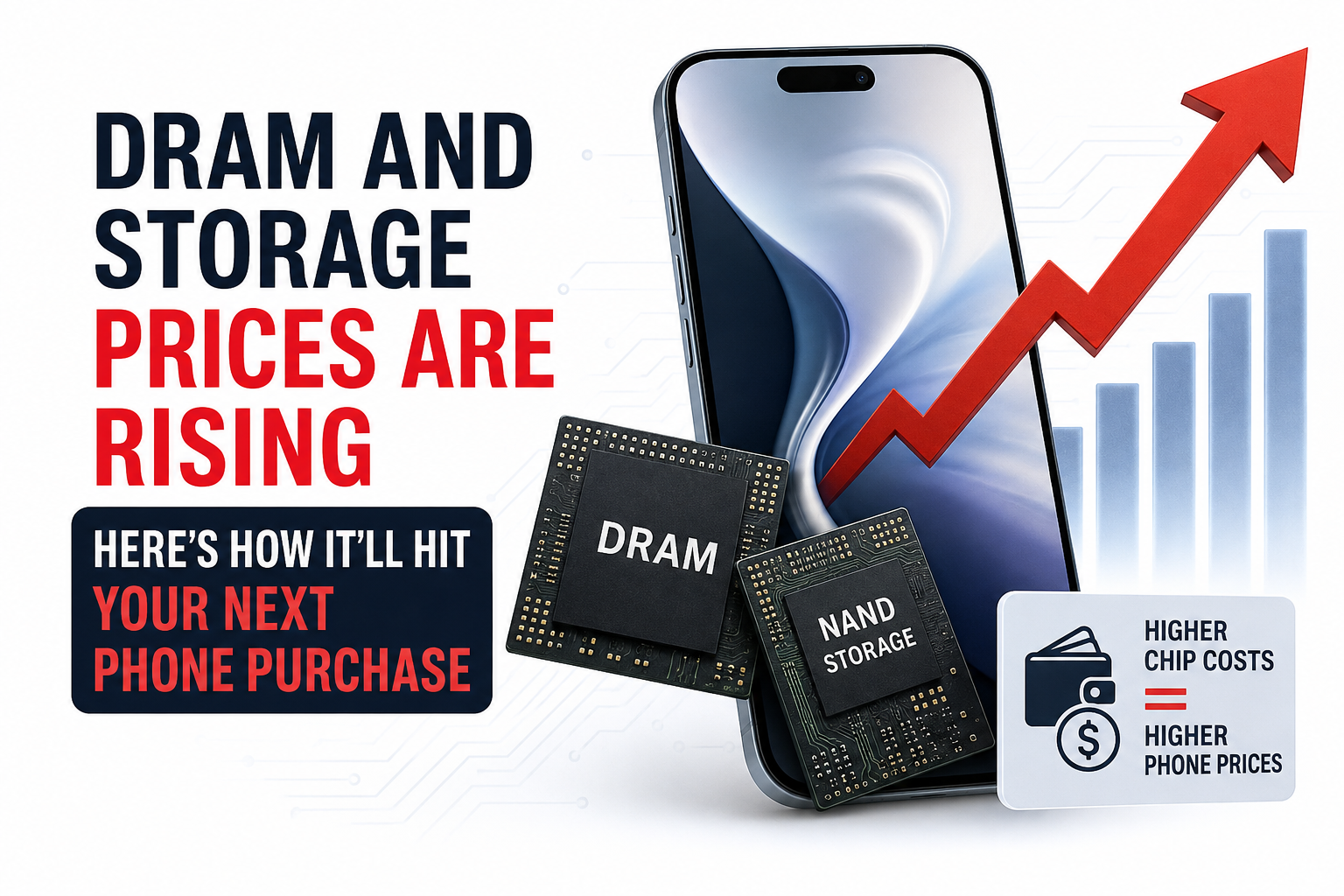
DRAM and Storage Prices Are Rising Here’s How It’ll Hit Your Next Phone Purchase
If you’ve been planning to upgrade your smartphone this year, you may want to pay close attention to what’s happening behind the scenes. While most people focus on camera upgrades, AI features, and faster processors, one of the biggest factors influencing smartphone prices is something you never actually see: memory chips.
Global prices for DRAM (Dynamic Random Access Memory) and NAND flash storage have been climbing throughout 2026. These components are essential in every modern smartphone, tablet, laptop, and AI-powered device. As demand continues to increase—particularly from AI servers and data centers—manufacturers are paying more for memory, and those higher costs are expected to reach consumers.
The result? Your next smartphone may cost more than expected, even if the hardware looks very similar to last year’s model.
What Are DRAM and NAND Storage?
Before understanding the price increase, it helps to know what these components actually do.
DRAM is your phone’s short-term memory. It stores apps and data that are currently being used, allowing multitasking, gaming, and AI features to run smoothly.
NAND flash storage is where everything stays permanently. Photos, videos, apps, operating systems, and downloaded files are all stored here.
Simply put:
- DRAM affects speed and multitasking.
- NAND storage determines how much space your phone has.
Every smartphone contains both, making them two of the most important hardware components after the processor.
Why Are Memory Prices Increasing?
Several market forces are pushing prices upward at the same time.
AI Is Consuming Massive Amounts of Memory
The biggest reason is artificial intelligence.
Companies building AI infrastructure require enormous quantities of high-performance memory chips for AI training and inference servers. Cloud providers and AI companies are purchasing memory in record volumes, leaving less production capacity for consumer electronics.
Manufacturers naturally prioritize higher-profit enterprise customers, tightening supply for smartphones.
Production Has Been Limited
Memory manufacturers reduced production during previous periods of weak demand.
Now that demand has returned much faster than expected, supply has not caught up.
This imbalance means buyers compete for available chips, pushing prices higher.
More Devices Need More Memory
Smartphones today ship with:
- Larger AI models
- Better cameras
- Higher-resolution videos
- More background processing
- Advanced gaming features
Even budget smartphones now commonly include 8GB RAM and 256GB storage, configurations that were premium only a few years ago.
That increases overall demand for memory chips across every price category.
How Will This Affect Smartphone Prices?
The effects won’t be identical across all devices, but several trends are already becoming visible.
Premium Phones Could Become Even More Expensive
Flagship smartphones already include:
- 12GB–24GB RAM
- 256GB–1TB storage
- Powerful AI processors
Because these phones use the largest memory configurations, manufacturers face the biggest increase in component costs.
Instead of absorbing those costs, companies may simply raise retail prices.
Mid-Range Phones May Lose Value
Rather than increasing prices directly, manufacturers sometimes reduce specifications.
For example, a phone that previously launched with:
- 12GB RAM
- 256GB storage
might instead launch with:
- 8GB RAM
- 128GB storage
while maintaining the same retail price.
Consumers effectively pay the same amount but receive less hardware.
Budget Phones Could Be Hit the Hardest
Budget devices operate with very small profit margins.
Even modest increases in memory prices can significantly affect manufacturing costs.
Brands may respond by:
- Increasing prices
- Removing premium features
- Slowing software update commitments
- Offering fewer storage options
Why AI Phones Need Even More Memory
Modern smartphones increasingly advertise “AI-powered” experiences.
Features such as:
- Live translation
- AI image editing
- Voice assistants
- On-device language models
- Intelligent photo enhancement
all require additional RAM and storage.
As AI capabilities expand, manufacturers can no longer reduce memory specifications without affecting performance.
This makes memory one of the fastest-growing hardware costs in smartphones.
Which Smartphone Brands Could Feel the Biggest Impact?
Almost every smartphone manufacturer relies on memory suppliers such as Samsung, SK hynix, and Micron.
Brands likely affected include:
- Apple
- Samsung
- Xiaomi
- OnePlus
- Motorola
- OPPO
- vivo
- Realme
The impact may vary depending on long-term supplier contracts, but eventually most companies will face higher component costs.
Could Phone Prices Increase by Hundreds of Dollars?
Not necessarily.
Memory is only one part of a smartphone’s total manufacturing cost.
Other components include:
- Displays
- Processors
- Camera sensors
- Batteries
- Wireless chips
- Assembly
- Shipping
However, when several component prices rise together, manufacturers often adjust retail pricing.
Industry analysts expect consumers to see:
- Higher launch prices
- Smaller discounts
- Fewer storage upgrades included for free
- More expensive premium configurations
Should You Buy a Smartphone Now or Wait?
If you’re already planning to replace your phone within the next few months, buying sooner could make financial sense.
Reasons include:
- Current inventory was often manufactured before recent memory price increases.
- Retail discounts remain available on many 2025 and early-2026 models.
- Premium storage variants may become more expensive later this year.
On the other hand, if your current phone still performs well, waiting could also bring benefits.
Future smartphones may justify higher prices with:
- Better AI features
- Faster processors
- Longer software support
- Improved battery efficiency
- Better cameras
The best decision depends on whether you prioritize saving money today or accessing the latest technology.
What Should Buyers Look For?
When comparing phones, don’t focus only on the processor.
Pay attention to memory configurations.
For most users in 2026:
- 8GB RAM + 256GB storage is an excellent minimum.
- 12GB RAM + 256GB storage offers better future-proofing.
- 512GB storage is worthwhile for users who record lots of 4K or 8K video.
Avoid paying premium prices for devices that still ship with only 128GB storage unless you primarily rely on cloud services.
Will Memory Prices Eventually Fall Again?
Yes.
The semiconductor industry has always moved in cycles.
When manufacturers expand production and demand stabilizes, memory prices generally decline. However, AI has introduced a new source of long-term demand that could keep prices elevated for longer than previous market cycles.
This means consumers may need to adjust to a future where generous RAM and storage upgrades are no longer as inexpensive as they once were.
Final Thoughts
The rise in DRAM and NAND storage prices may not sound exciting, but it has real consequences for anyone planning to buy a new smartphone. Memory is at the heart of every modern device, and growing demand from AI infrastructure is changing the economics of consumer electronics.
Over the coming months, shoppers are likely to notice higher prices, fewer discounts, or lower memory configurations at the same price points. While smartphone innovation continues to accelerate, the cost of delivering those AI-powered experiences is also increasing.
If you’re considering an upgrade, it may be worth comparing today’s deals before the next wave of smartphones arrives with higher memory costs built into their price tags.
Frequently Asked Questions (FAQs)
1. Why are DRAM and NAND prices increasing?
Demand from AI servers, cloud computing, and high-performance computing has significantly increased the need for memory chips, while supply remains relatively tight.
2. Will all smartphones become more expensive?
Not all models, but many premium, mid-range, and budget smartphones may experience price increases or reduced memory configurations.
3. Does more RAM improve AI performance?
Yes. AI-powered features, multitasking, gaming, and advanced image processing all benefit from additional RAM.
4. Should I buy a phone before prices increase?
If you already plan to upgrade soon, buying current models during discounts could help you avoid potential price increases.
5. Which storage size is recommended in 2026?
For most users, 256GB offers the best balance between price, future-proofing, and everyday storage needs.
Related Articles
- On-Device AI Explained: Why Your Next Phone or Laptop Brags About It
- Foldable Phones in 2026: Are the Creases Finally Gone?
- Best Budget Laptops for Students 2026: Back-to-School Buying Guide
- GaN Chargers 2026: Why Your Old Charger Is Officially Obsolete
- Best True Wireless Earbuds With the Longest Battery Life (2026 Tested Picks)