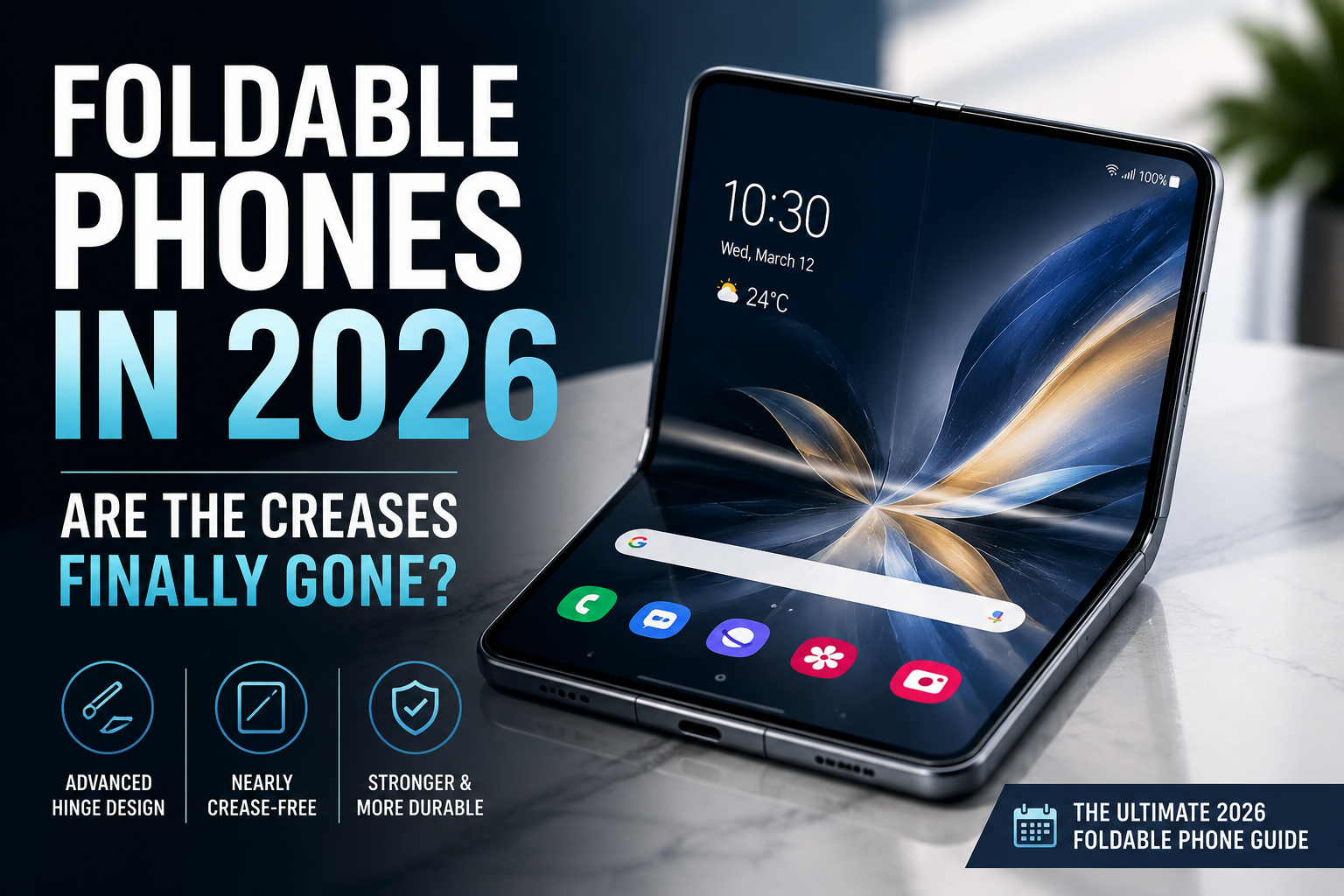
Foldable Phones in 2026: Are the Creases Finally Gone?
There was a time when foldable smartphones felt more like futuristic prototypes than practical everyday devices. The first generation impressed everyone with the idea of carrying a phone that could unfold into a tablet, but they also came with compromises that were difficult to ignore. Thick designs, fragile displays, visible screen creases, and premium prices made them exciting but hard to recommend to most buyers.
In 2026, the story is very different. Foldable phones have evolved into polished flagship devices that can comfortably compete with traditional smartphones. Manufacturers have spent years refining hinge mechanisms, strengthening flexible displays, improving durability, and optimizing software specifically for larger folding screens. As a result, foldables are no longer niche products designed only for early adopters—they are becoming a genuine alternative to conventional flagship phones.
One question, however, continues to dominate online discussions and buying guides: have manufacturers finally managed to eliminate the display crease? The answer is encouraging, although not entirely perfect.
The Foldable Market Has Finally Matured
The biggest difference between foldable phones today and those released just a few years ago is confidence. Companies are no longer experimenting with the technology—they are refining it. Nearly every premium smartphone manufacturer now has a foldable device in its portfolio, and each new generation brings noticeable improvements rather than dramatic redesigns.
Consumers have also become more comfortable with the idea of owning a foldable phone. What was once considered risky technology is now viewed as a premium lifestyle product, especially for users who value productivity, entertainment, and multitasking. Improved reliability and longer software support have also helped build trust among buyers who were previously hesitant to spend flagship-level money on a folding device.
So, Are the Creases Finally Gone?
The crease has been the biggest criticism of foldable phones since the beginning. On earlier devices, it was easy to see and even easier to feel while scrolling through apps or watching videos. Bright reflections made it even more obvious, constantly reminding users that the display was bending in the middle.
Thankfully, 2026 foldable phones have dramatically reduced this issue. Thanks to redesigned water-drop hinges, stronger ultra-thin glass, and more advanced flexible OLED panels, the crease has become much shallower than before. During normal use, especially when browsing social media, reading articles, watching YouTube, or streaming movies, most users barely notice it after a few days.
The crease hasn’t disappeared entirely, and anyone claiming otherwise would be exaggerating. Under direct lighting or when the screen is turned off, it can still be seen. Running your finger across the center of the display also reveals a slight indentation. However, compared to foldables from four or five years ago, the difference is remarkable. What was once a major distraction has become a relatively minor cosmetic compromise.
Better Hinges Have Changed Everything
Much of this progress comes from improvements inside the phone rather than on the display itself. The hinge has always been the heart of every foldable smartphone, and manufacturers have invested heavily in making it smaller, stronger, and more durable.
Modern hinge systems allow the display to fold in a gentler curve instead of creating a sharp bend. This wider folding radius reduces stress on the screen, making the crease less noticeable while also improving the display’s long-term durability. Many foldables now close completely flat without leaving a visible gap, giving them a cleaner and more premium appearance.
The hinge itself also feels significantly smoother when opening and closing the phone. Instead of feeling like delicate machinery, today’s foldables have a reassuring firmness that inspires confidence. It’s clear that manufacturers have learned from years of customer feedback and engineering improvements.
Displays Feel More Like Traditional Flagship Screens
Beyond the crease, display quality has improved in almost every area. Foldable phones now feature brighter OLED panels with excellent outdoor visibility, vibrant colors, deep blacks, and adaptive refresh rates that make scrolling incredibly smooth. Whether you’re reading articles, editing documents, gaming, or watching HDR movies, the experience feels every bit as premium as a traditional flagship smartphone.
Ultra-thin glass technology has also matured significantly. Earlier foldables often felt soft or plastic-like under the finger, but newer devices provide a firmer, smoother surface that feels much closer to the glass displays found on standard smartphones. While users still need to treat flexible displays with slightly more care than conventional screens, everyday usage feels far more natural than it once did.
Durability Is No Longer a Deal Breaker
One of the biggest fears surrounding foldable phones has always been durability. Buyers worried about hinges wearing out, displays cracking, or dust damaging the internal mechanism. Those concerns were understandable during the first few generations, but modern foldables have made enormous progress.
Manufacturers now design their hinges to withstand hundreds of thousands of folds, which translates to many years of normal daily use. Improved sealing techniques have also increased resistance to water, while stronger aluminum frames and tougher flexible display materials provide greater confidence when carrying the device every day.
Although foldables still require a little more care than traditional smartphones, they are no longer fragile gadgets that need to be handled with extreme caution. For most users, durability is unlikely to be a deciding factor anymore.
Cameras Are Finally Living Up to Flagship Expectations
Camera quality used to be another weakness of foldable phones. To keep the devices thin, manufacturers often compromised on sensor size or zoom capabilities. That compromise has largely disappeared in 2026.
Today’s premium foldables include flagship-grade camera systems capable of producing excellent photos in daylight and low-light conditions. Improved computational photography, larger image sensors, optical image stabilization, and advanced AI processing allow these devices to compete directly with conventional flagship smartphones.
For most people, choosing a foldable no longer means sacrificing camera performance. Whether capturing landscapes, portraits, or videos, modern foldables deliver results that satisfy even demanding smartphone photographers.
Software Finally Makes Full Use of the Bigger Screen
Perhaps the biggest reason foldables feel more useful today is software optimization. Android has evolved considerably, allowing applications to transition smoothly between folded and unfolded modes. Split-screen multitasking, floating windows, drag-and-drop support, and desktop-style workflows have become much more refined.
Reading documents while replying to emails, watching videos while taking notes, or comparing multiple apps side by side feels natural rather than experimental. These productivity features are what truly separate foldables from traditional smartphones and give buyers a practical reason to choose them.
Instead of simply offering a larger display, foldable phones now provide an entirely different way of interacting with mobile software.
Which Foldable Phones Stand Out in 2026?
Samsung continues to dominate the foldable market with its Galaxy Z Fold and Galaxy Z Flip series, offering mature software, premium hardware, and years of software updates. Google’s Pixel Fold remains one of the best choices for photography enthusiasts, while OnePlus has impressed buyers with its lightweight design, minimal crease, and exceptionally fast charging.
HONOR has also established itself as a serious competitor by producing incredibly thin foldables with large batteries and excellent displays. Rather than competing only on specifications, each manufacturer has developed its own strengths, giving consumers more meaningful choices than ever before.
Are Foldable Phones Finally Worth Buying?
For many buyers, the answer is yes. Foldable smartphones have reached a point where they feel polished rather than experimental. The crease, while still technically present, is no longer the defining characteristic of the experience. Instead, users are more likely to appreciate the immersive display, powerful multitasking features, flagship performance, and increasingly refined design.
Of course, foldables are still more expensive than traditional smartphones, and repair costs remain higher if something goes wrong. Buyers who simply want a reliable phone for messaging, social media, and photography may still find better value in a conventional flagship device. However, anyone looking for a phone that doubles as a compact tablet will discover that foldables now deliver an experience that few standard smartphones can match.
Final Verdict
Foldable phones in 2026 represent the strongest argument yet for the future of smartphone design. Years of engineering improvements have transformed them from expensive experiments into mature flagship devices capable of meeting the needs of everyday users. The display crease, once the technology’s biggest weakness, has been reduced to the point where most people stop noticing it during normal use.
If you’ve been waiting for foldable technology to mature before making the investment, this may finally be the right time. While perfection hasn’t quite arrived, foldable smartphones have never been more practical, more durable, or more enjoyable to use. For users who value innovation, productivity, and immersive displays, 2026 is shaping up to be the year when foldables truly become mainstream rather than merely futuristic.
Related Articles
- iPhone 18 Pro Release Date & Price: Everything Confirmed So Far (July 2026 Update)
- Xiaomi Watch S5 vs Apple Watch: Is This the Smartwatch Upgrade Worth Watching?
- GaN Chargers 2026: Why Your Old Charger Is Officially Obsolete
- Best Budget Laptops for Students 2026: Back-to-School Buying Guide
- Dual-Network Bluetooth Trackers vs Apple AirTag: Which Item Finder Wins in 2026