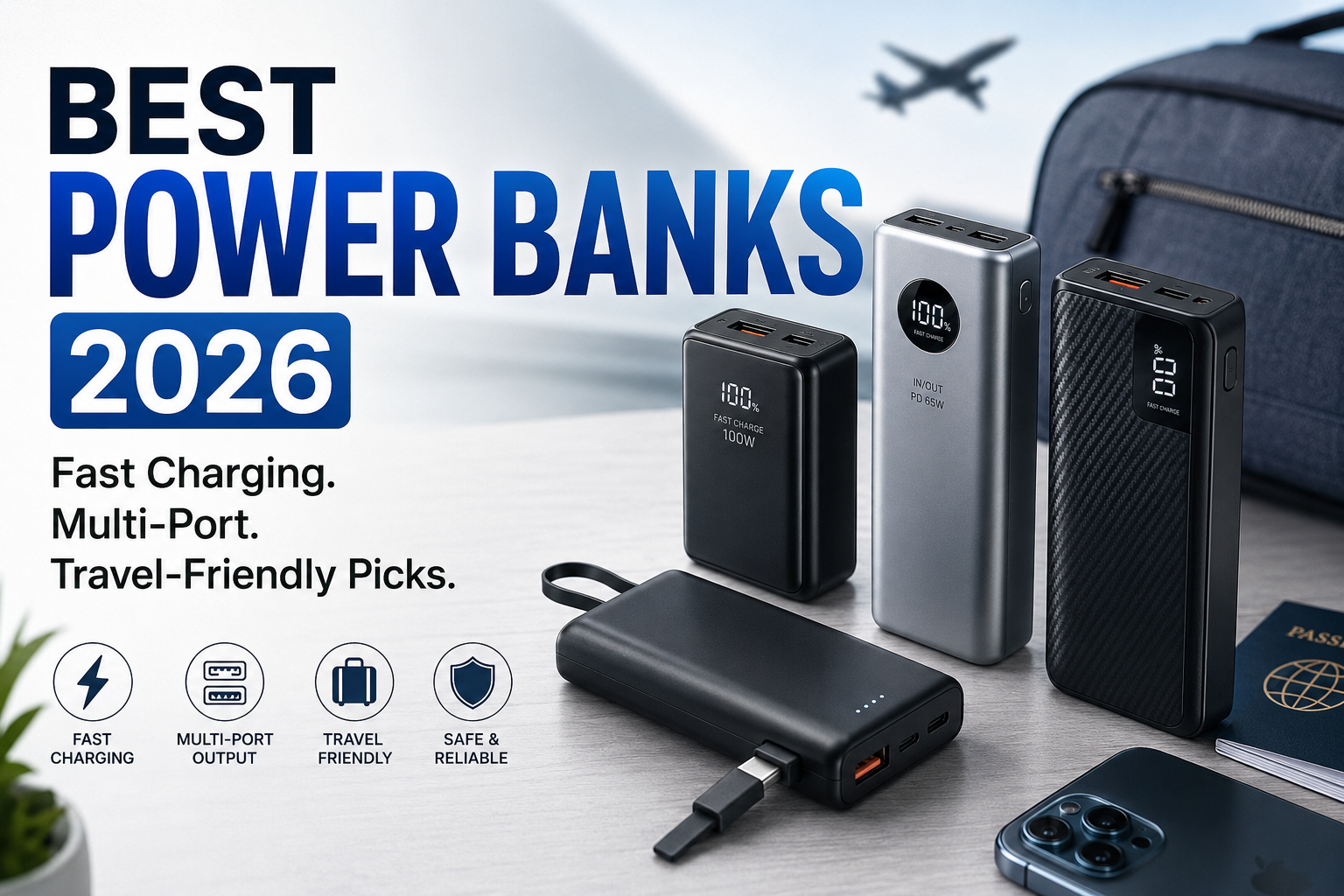
Best Power Banks 2026: Fast Charging, Multi-Port, and Travel-Friendly Picks
There has never been a better time to invest in a quality power bank. As smartphones become more powerful and feature-rich, their batteries are often pushed to their limits by AI-powered features, brighter displays, faster processors, and constant 5G connectivity. Whether you’re commuting to work, traveling abroad, attending college, or working remotely, a reliable portable charger has become an essential accessory rather than a luxury.
The demand for power banks continues to rise in 2026, especially after major shopping events like Prime Day, when buyers compare the best remaining deals and look for long-term value. However, choosing the right model isn’t always straightforward. Capacity, charging speed, safety features, portability, and compatibility all play a significant role in determining which power bank is best suited to your needs.
This comprehensive buying guide explains everything you need to know before purchasing a power bank in 2026, helping you make an informed decision without overspending.
Why Power Banks Are More Important Than Ever
Modern smartphones, tablets, wireless earbuds, smartwatches, and even lightweight laptops have become indispensable parts of everyday life. While battery technology has improved over the years, the increasing power demands of modern devices mean many users still find themselves searching for a charger before the day is over.
A power bank offers the freedom to stay connected wherever you are. Business professionals can continue working during long flights, students can keep their devices running throughout lectures, photographers can back up images while traveling, and outdoor enthusiasts can remain connected even in remote locations. Rather than relying on public charging stations or searching for available power outlets, carrying a portable charger ensures your devices are always ready when you need them most.
Understanding Power Bank Capacity
One of the first specifications most buyers notice is battery capacity, which is measured in milliamp-hours (mAh). While a larger number generally indicates more stored energy, choosing the highest capacity isn’t always the best decision.
A 10,000mAh power bank remains an excellent option for users who need a lightweight backup for their smartphone during daily commutes or short trips. These models easily fit into pockets or handbags while providing one or two full charges for most modern smartphones.
For most people, a 20,000mAh power bank offers the ideal balance between portability and performance. It provides multiple smartphone recharges while remaining compact enough for regular travel. This capacity has become the sweet spot for professionals, students, and frequent travelers.
Users who carry laptops, tablets, cameras, or multiple mobile devices may benefit from larger capacities ranging between 25,000mAh and 30,000mAh. Although these models are heavier, they provide significantly longer battery life and can support multiple devices throughout extended journeys.
Fast Charging Has Become the New Standard
Charging speed is now just as important as battery capacity. Waiting several hours to recharge a smartphone is no longer acceptable for most users, and manufacturers have responded by introducing advanced fast-charging technologies.
Modern power banks commonly support USB Power Delivery (USB PD), Qualcomm Quick Charge, and PPS (Programmable Power Supply). These technologies allow compatible smartphones to charge much faster than traditional USB chargers. Many premium models now deliver between 45W and 100W of output power, making them capable of charging tablets, gaming handhelds, and even USB-C laptops.
However, fast charging depends on more than just the power bank itself. Your smartphone, charging cable, and wall charger must also support compatible charging standards to achieve maximum speeds.
Why USB-C Has Become Essential
USB-C has rapidly become the universal charging standard across smartphones, tablets, laptops, gaming devices, and accessories. Unlike older USB-A ports, USB-C supports faster charging speeds, higher power delivery, and quicker data transfers.
Most premium power banks released in 2026 include USB-C ports that function as both input and output, allowing the power bank itself to recharge quickly while simultaneously providing high-speed charging to connected devices. Choosing a USB-C power bank ensures greater compatibility with current and future devices while reducing the number of cables you need to carry.
Multi-Port Charging Makes Everyday Life Easier
Many people now travel with several electronic devices rather than just a smartphone. Alongside phones, it’s common to carry wireless earbuds, smartwatches, tablets, portable gaming consoles, and even laptops.
A multi-port power bank allows several devices to charge simultaneously without sacrificing convenience. Premium models often include multiple USB-C and USB-A ports, intelligently distributing power depending on the connected devices. This makes them especially useful for families, business travelers, and content creators who rely on multiple gadgets throughout the day.
Travel-Friendly Designs Are Worth Considering
Frequent travelers should pay close attention to both the physical design and airline compatibility of a power bank. Compact models are easier to carry in backpacks or handbags, while lightweight construction reduces travel fatigue.
Many manufacturers now design their power banks specifically for travel, incorporating slim profiles, integrated USB-C cables, durable aluminum or polycarbonate casings, and digital battery displays that show the remaining charge percentage.
Most airlines also require power banks to remain in carry-on luggage rather than checked baggage due to lithium-ion battery regulations. Fortunately, the majority of 20,000mAh models fall within accepted airline capacity limits, making them excellent travel companions.
Safety Features Should Never Be Overlooked
Battery safety is one of the most important aspects of any portable charger. Reputable manufacturers include advanced protection systems designed to safeguard both the power bank and connected devices.
High-quality power banks continuously monitor temperature, voltage, and current levels to prevent overheating, overcharging, short circuits, and excessive power delivery. These safety mechanisms not only protect expensive smartphones and laptops but also extend the lifespan of the battery itself.
Purchasing a certified power bank from a trusted brand may cost slightly more, but the additional reliability and safety are well worth the investment.
Wireless Charging Power Banks Continue to Improve
Wireless charging technology has become increasingly popular, particularly with the widespread adoption of magnetic charging systems. Many premium power banks now include built-in wireless charging pads that allow compatible smartphones to recharge simply by placing them on the surface.
This added convenience is particularly useful during travel or while working at a desk, eliminating the need for extra cables. However, wireless charging remains slower than wired USB-C charging and generates more heat. Users who prioritize charging speed should continue using wired connections whenever possible.
Build Quality Can Make a Significant Difference
A power bank is designed to travel with you, which means durability matters. Premium models often feature aluminum construction, reinforced corners, scratch-resistant coatings, and high-quality battery cells capable of maintaining performance over hundreds of charging cycles.
Many modern power banks also include digital displays that accurately indicate the remaining battery percentage instead of relying solely on simple LED indicators. This makes it easier to monitor battery levels and plan recharging before running out of power.
Choosing the Right Power Bank for Your Lifestyle
Selecting the right power bank depends entirely on how you use your devices. Casual smartphone users generally benefit from compact models that prioritize portability, while professionals working remotely often require higher-capacity batteries capable of charging laptops throughout the day.
Students may prefer lightweight designs that easily fit into backpacks, whereas travelers frequently appreciate larger batteries that can power several devices during long journeys. Rather than simply choosing the largest battery available, buyers should carefully consider their daily routine, charging habits, and the types of devices they carry.
Are Expensive Power Banks Worth the Extra Money?
Budget-friendly power banks can certainly provide reliable charging for occasional use, but premium models often justify their higher prices through better battery efficiency, faster charging technologies, stronger safety systems, and superior build quality.
Well-known manufacturers also tend to use higher-quality lithium-ion cells that retain their capacity longer than cheaper alternatives. Over several years of regular use, this improved durability often makes premium models a better long-term investment despite their higher initial cost.
Final Verdict
Power banks have evolved far beyond simple backup batteries. In 2026, they have become intelligent charging solutions capable of powering everything from smartphones and tablets to laptops and gaming devices. Features such as USB-C Power Delivery, multi-port charging, high-speed output, advanced safety systems, and travel-friendly designs have transformed them into essential accessories for both work and leisure.
For most users, a 20,000mAh USB-C Power Delivery power bank with at least 45W fast charging represents the best balance between portability, charging speed, and long-term value. Those who regularly travel with laptops or multiple devices may benefit from higher-capacity models offering 65W or even 100W output.
Instead of focusing solely on battery size, buyers should prioritize charging technology, safety certifications, build quality, and compatibility with their devices. Investing in the right power bank today ensures your devices remain powered wherever life takes you.
Frequently Asked Questions
1. What is the best power bank capacity for everyday use?
A 10,000mAh power bank is sufficient for most everyday users, offering one or two full smartphone charges while remaining lightweight and portable.
2. Is a 20,000mAh power bank allowed on airplanes?
Yes. Most airlines allow power banks of this capacity in carry-on luggage, although they are generally prohibited in checked baggage.
3. Can a power bank charge a laptop?
Yes. Many modern power banks support USB-C Power Delivery with outputs ranging from 65W to 100W, making them suitable for charging compatible laptops.
4. Does fast charging reduce battery life?
Modern smartphones are designed to safely handle fast charging. Using certified chargers and high-quality cables minimizes battery wear and ensures safe operation.
5. How long should a quality power bank last?
A well-made power bank typically lasts between three and five years, depending on usage patterns, charging cycles, and proper maintenance.