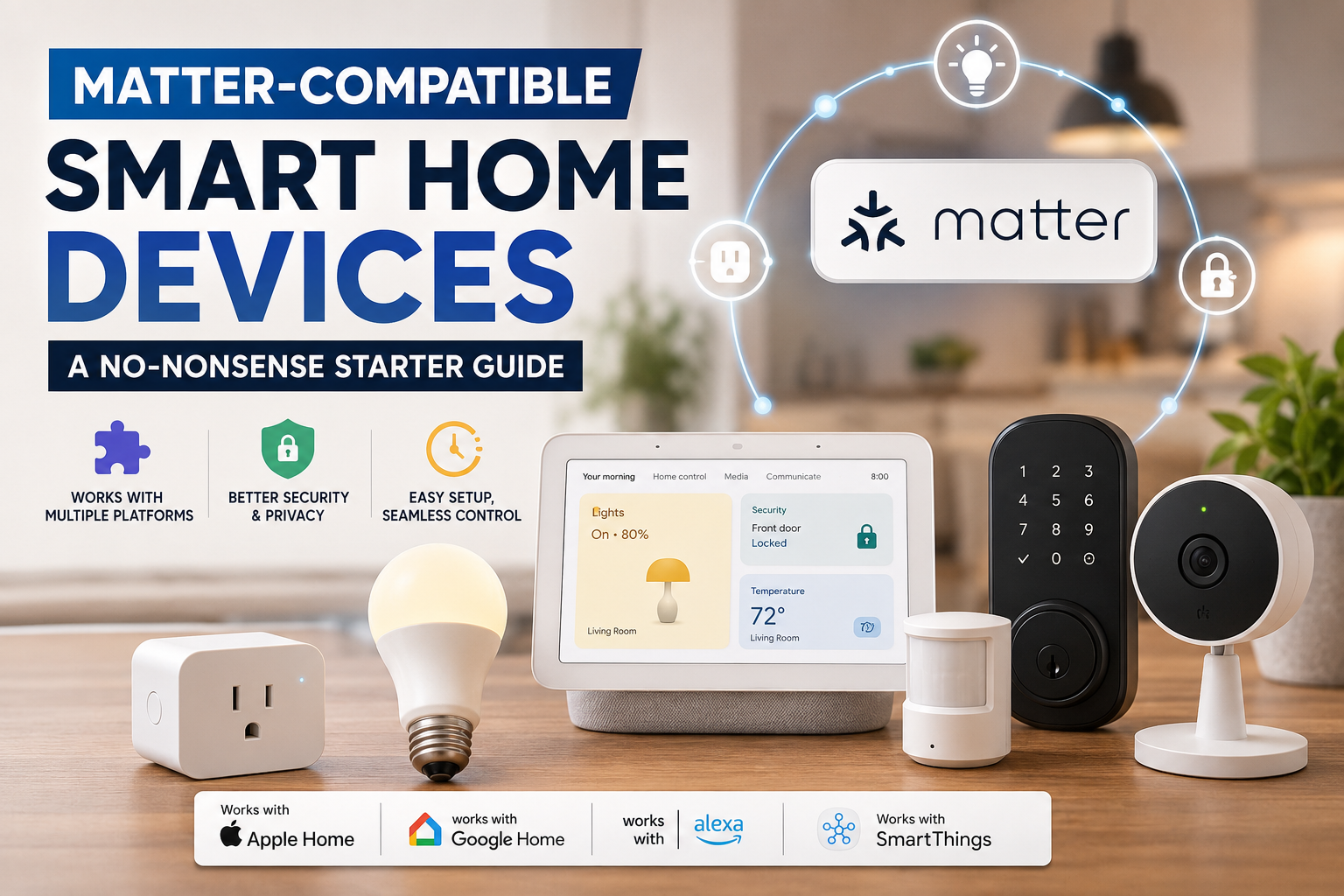
Matter-Compatible Smart Home Devices: A No-Nonsense Starter Guide
The smart home market has grown rapidly over the last few years, but one problem has remained consistent compatibility. Many users have purchased smart bulbs, locks, speakers, or plugs only to discover that they don’t work with their preferred smart home platform. Some devices require separate apps, while others only support a specific voice assistant. This confusing experience has often made building a smart home more complicated than it should be.
That’s where Matter comes in. Matter is a universal smart home standard designed to make devices from different brands work together seamlessly. Whether you use Apple Home, Google Home, Amazon Alexa, or Samsung SmartThings, Matter helps eliminate many of the compatibility issues that have frustrated users for years. If you’re planning your first smart home or upgrading your existing setup, choosing Matter-compatible devices is one of the smartest decisions you can make.
What Is Matter?
Matter is an open smart home connectivity standard developed by the Connectivity Standards Alliance (CSA) in collaboration with major technology companies, including Apple, Google, Amazon, Samsung, IKEA, Philips Hue, LG, and many others. Instead of replacing Wi-Fi or Bluetooth, Matter acts as a common language that allows smart devices from different manufacturers to communicate with one another.
For consumers, this means you no longer need to worry as much about whether a device supports a specific ecosystem. A Matter-certified smart bulb or plug can often work with multiple smart home platforms, giving you greater flexibility and making future upgrades much easier.
Why Matter Is Changing the Smart Home Industry
Before Matter, buying smart home products often required careful research. A smart lock that worked perfectly with Google Home might not support Apple Home, while another device required its own hub and mobile app. This lack of compatibility forced users to stay within a single ecosystem or spend extra money on additional hardware.
Matter changes that experience by creating a shared standard across the industry. Instead of being locked into one brand, homeowners can mix products from different manufacturers without worrying about complex integrations. This not only simplifies setup but also protects your investment because switching from Android to iPhone—or vice versa—doesn’t necessarily mean replacing your smart home devices.
Benefits of Matter-Compatible Smart Home Devices
One of the biggest advantages of Matter is its simplicity. Most Matter devices can be added by scanning a QR code, allowing them to connect to your preferred smart home platform in just a few minutes. The setup process is designed to be beginner-friendly, reducing the frustration often associated with older smart home products.
Another major benefit is cross-platform compatibility. Instead of purchasing separate versions of the same device, a Matter-certified product can work across multiple ecosystems. This is especially useful for households where family members use different smartphones or voice assistants.
Matter also improves long-term reliability. Many compatible devices communicate locally within your home network, which often results in faster response times, improved privacy, and better performance even if your internet connection is temporarily unavailable.
Popular Matter-Compatible Devices You Can Buy
The Matter ecosystem continues to grow every month, and many popular smart home products now support the standard. Some of the best options for beginners include smart bulbs, smart plugs, smart switches, smart locks, motion sensors, thermostats, and smart blinds.
Smart bulbs are usually the easiest starting point because they require minimal installation and allow you to control lighting, brightness, and schedules directly from your smartphone or voice assistant. Smart plugs are another affordable upgrade, turning ordinary appliances like lamps, coffee makers, or fans into connected devices without replacing the appliance itself.
As the ecosystem expands, more security cameras, robot vacuums, door sensors, and home appliances are also expected to receive Matter support through new product releases or firmware updates.
Do You Need a Matter Hub?
Not every Matter device requires a dedicated hub, but most smart homes need a Matter Controller. Many popular smart speakers, smart displays, and home hubs already include this functionality. Devices such as Google Nest speakers, Apple HomePod, Amazon Echo speakers, and Samsung SmartThings hubs can serve as Matter controllers.
If you plan to use Thread-enabled Matter devices, you’ll also benefit from having a Thread Border Router, which is built into many modern smart speakers and hubs. This creates a faster and more reliable mesh network throughout your home.
How to Choose the Right Matter Devices
Before purchasing any smart home product, always check whether it carries the official Matter logo. Although many manufacturers have started adopting the standard, not every product currently supports it. Some older devices continue to rely on proprietary systems that may limit compatibility.
It’s also worth thinking about the type of automation you want. Beginners often get the best value by starting with lighting and smart plugs before expanding into locks, thermostats, sensors, and security devices. Buying Matter-compatible products today helps ensure your smart home remains flexible as new technologies become available.
Is Matter Worth It in 2026?
For most people, the answer is yes. Matter has made smart homes easier to build than ever before by reducing compatibility problems and allowing devices from different brands to work together. While the ecosystem is still growing, it has already become the preferred standard for many leading manufacturers.
If you’re investing in smart home technology today, choosing Matter-compatible devices is a practical way to avoid ecosystem lock-in and make future upgrades much simpler. Instead of worrying about whether a device works with your preferred platform, you can focus on finding the features and price that best suit your needs.
Final Verdict
Matter is quickly becoming the foundation of the modern smart home. By creating a common standard across the industry, it removes many of the frustrations that have prevented people from building connected homes in the past. Whether you’re buying your first smart bulb or planning a complete home automation setup, Matter-compatible devices offer better flexibility, easier installation, and improved long-term value.
As more manufacturers adopt the standard, Matter will continue to make smart homes more accessible for everyone. If you’re starting your smart home journey in 2026, choosing Matter-compatible devices is one of the smartest investments you can make.
Frequently Asked Questions
1. What is a Matter-compatible device?
A Matter-compatible device follows the Matter standard, allowing it to work with multiple smart home platforms like Apple Home, Google Home, Amazon Alexa, and Samsung SmartThings.
2. Does Matter require Wi-Fi?
No. Matter supports Wi-Fi, Ethernet, and Thread, while Bluetooth is generally used during setup.
3. Do I need a hub for Matter devices?
Most homes need a Matter Controller, which is often built into compatible smart speakers or smart hubs.
4. Is Matter better than Zigbee?
Matter focuses on cross-platform compatibility, while Zigbee is a communication protocol. Many new smart home products are adopting Matter for broader compatibility.
5. Can existing smart devices be upgraded to Matter?
Some manufacturers provide firmware updates that add Matter support, but many older devices will remain limited to their original platforms.
Related Articles
- Home Robots in 2026: Which Ones Are Actually Useful vs Gimmicky?
- Best Home Security Cameras 2026: Budget and Premium Picks Compared
- Smart Ring vs Smartwatch: Which Should You Actually Buy?
- On-Device AI Explained: Why Your Next Phone Brags About It
- Foldable Phones in 2026: Are the Creases Finally Gone?