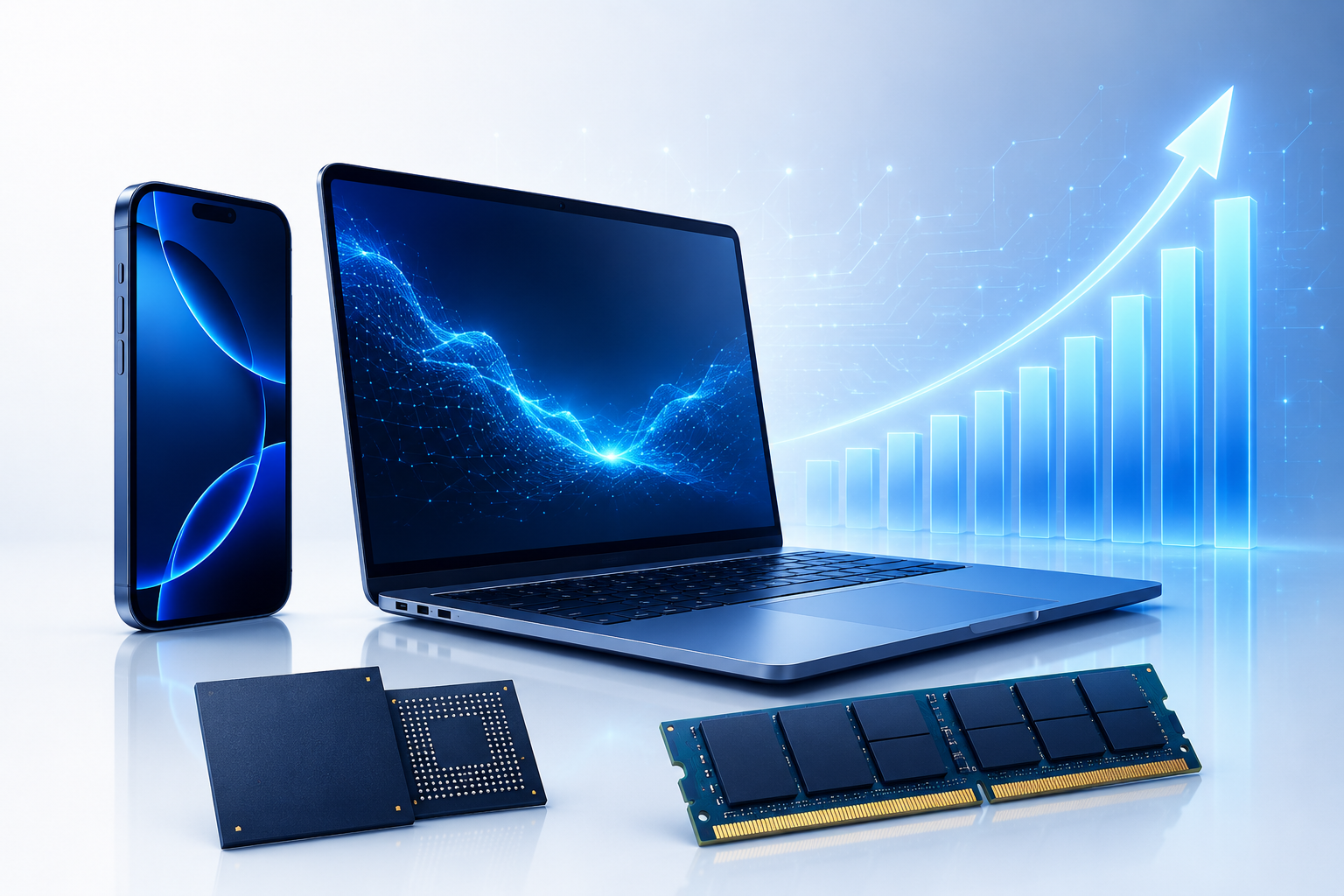
The price of memory chips rarely makes headlines, yet it quietly influences the cost of nearly every smartphone, laptop, gaming PC, and AI-enabled device. In 2026, that hidden component has become one of the biggest reasons consumers may end up paying more for new hardware.
Industry analysts report that LPDDR5X mobile DRAM prices jumped approximately 89% quarter-over-quarter in Q2 2026, while Gartner projects memory pricing could rise by as much as 130% during the current cycle due to strong AI infrastructure demand and constrained supply. The result is simple: manufacturers are paying significantly more for RAM, and those costs are increasingly reaching consumers.
If you’re planning to upgrade your phone or laptop this year, understanding what’s happening in the memory market can help you decide whether buying now—or waiting—makes better financial sense.
Why Are RAM Prices Rising in 2026?
Memory pricing follows a familiar pattern of boom-and-bust cycles, but the current surge stands out because it is being driven by artificial intelligence rather than traditional consumer demand.
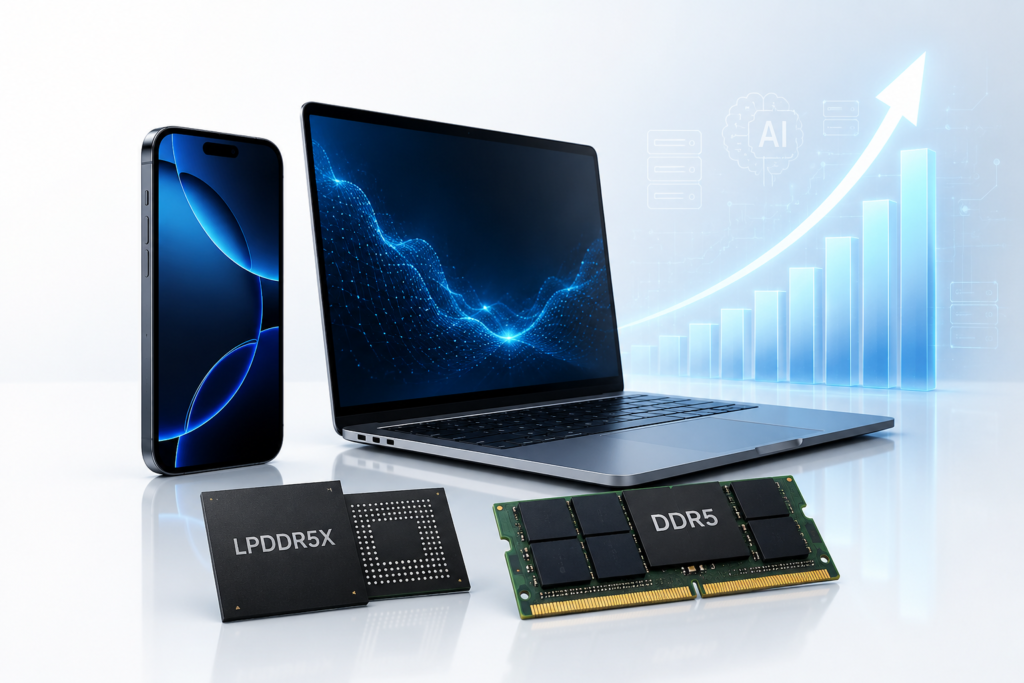
The biggest factor is the explosive growth of AI servers. Companies building generative AI platforms require enormous amounts of high-performance DRAM and HBM (High Bandwidth Memory). Memory manufacturers are prioritizing those higher-margin products, leaving less production capacity available for consumer-grade LPDDR5X and DDR5 memory.
At the same time, smartphone makers are increasing RAM capacities to support on-device AI features. Phones that once shipped with 8GB are increasingly moving toward 12GB or even 16GB configurations.
The combination of stronger demand and tighter supply has created one of the fastest memory price increases in recent years.
Voltixaz Analysis
Unlike previous shortages caused by pandemic disruptions, today’s price increase is driven by structural changes in the semiconductor industry. AI infrastructure is no longer a temporary trend—it has become a long-term investment priority. That makes this memory cycle more sustainable than earlier spikes and suggests prices may remain elevated longer than consumers expect.
What’s Driving the Supply Constraints?
Several industry trends are occurring simultaneously.
AI Data Centers Are Consuming More Memory
Large AI clusters require thousands of GPUs, each paired with substantial amounts of high-speed memory. Suppliers naturally allocate more manufacturing capacity toward these premium enterprise products because they generate significantly higher profits.
Smartphone RAM Requirements Continue Growing
Modern AI-powered smartphones increasingly process language models, image editing, translation, and voice recognition directly on the device. These workloads require more RAM than previous generations.
PC Refresh Cycle
Businesses delayed upgrades during recent economic uncertainty. As corporate refresh cycles resume, DDR5 demand has accelerated alongside consumer AI PC launches.
Manufacturing Capacity Isn’t Unlimited
Building additional DRAM fabrication facilities requires billions of dollars and several years of construction. Supply cannot expand overnight, even when demand rises sharply.
Voltixaz Analysis
Many consumers assume chip shortages happen because companies underestimate demand. In reality, semiconductor manufacturing is carefully balanced years in advance. The rapid emergence of AI changed demand much faster than production capacity could adapt.
How Will This Affect Smartphone Prices?
For flagship smartphones, memory is becoming a larger percentage of the total bill of materials.
Instead of reducing RAM capacity, manufacturers are more likely to increase retail pricing or remove discounts. Premium devices equipped with 12GB or 16GB RAM may see larger price increases than entry-level models.
Consumers could also notice:
| Impact | Expected Result |
|---|---|
| Higher launch prices | More expensive flagship phones |
| Fewer discounts | Longer wait before price drops |
| Reduced storage promotions | Manufacturers protect margins |
| Longer upgrade cycles | Users keep devices longer |
Budget phones may be affected differently. Rather than raising prices dramatically, brands may reduce RAM configurations from 8GB to 6GB or delay adopting newer memory technologies.
Voltixaz Analysis
Consumers often focus on processors and cameras when comparing phones, but RAM pricing quietly influences every configuration decision. If memory remains expensive throughout 2026, flagship phones with higher RAM capacities could become noticeably more expensive than equivalent models launched just a year earlier.
What About Laptops and PCs?
The PC market is experiencing similar pressure.
New AI PCs require larger memory capacities because local AI processing consumes significantly more RAM than traditional workloads.
Windows Copilot+, creative software, large language models, and local AI assistants all benefit from 16GB or even 32GB of memory.
As a result:
- Entry-level laptops may become more expensive.
- Mid-range systems are increasingly standardizing on 16GB RAM.
- High-end creator laptops could see the largest price increases.
Gartner estimates PC pricing could rise by around 17%, while smartphones may experience increases closer to 13%, depending on manufacturer strategies and regional markets.
Voltixaz Analysis
The transition resembles the move from HDDs to SSDs several years ago. What was once considered “premium” hardware gradually becomes the new baseline. The difference today is that rising component costs make this transition more expensive for buyers.
RAM Price Surge: 2026 vs Previous Memory Cycles
| Factor | Previous Cycles | 2026 Cycle |
|---|---|---|
| Main demand driver | Smartphones | AI infrastructure |
| Enterprise demand | Moderate | Extremely high |
| Consumer demand | Stable | Increasing |
| Supply flexibility | Higher | Limited |
| Expected duration | Short-term | Potentially longer |
The major difference is that enterprise AI demand is likely to remain strong even if smartphone sales fluctuate.
Should You Buy Now or Wait?
The answer depends on what you’re planning to purchase.
Buy Now If:
- You need a new laptop for work or college.
- You’re already planning to buy a flagship smartphone.
- You want higher RAM configurations.
- Current discounts are available.
Wait If:
- Your current device still performs well.
- You’re considering an entry-level phone.
- You’re hoping for holiday promotions.
- You don’t require AI-focused hardware.
Voltixaz Analysis
Waiting does not necessarily guarantee lower prices. If memory costs remain elevated into early 2027, manufacturers may continue increasing prices rather than offering larger discounts. Buyers with immediate needs may actually spend less by purchasing current-generation hardware while inventory remains available.
Pros and Cons
Pros
- New devices include more RAM than previous generations.
- Better performance for AI applications.
- Improved multitasking.
- Longer software support.
Cons
- Higher retail prices.
- Fewer promotional discounts.
- Premium models affected the most.
- Budget devices may reduce RAM capacity.
Who Should Buy?
Buying now makes the most sense for:
- Students purchasing laptops before a new semester.
- Professionals needing productivity upgrades.
- Gamers replacing aging hardware.
- Creators working with AI-powered editing software.
- Buyers who find strong discounts on current-generation devices.
Who Should Skip?
Waiting may be the better choice if:
- Your current device is less than two years old.
- You mainly browse the web and use social media.
- You’re hoping for next-generation processors.
- You don’t need AI-focused features.
Expert Tips Before Buying
Choose at least 16GB RAM for a new Windows laptop if you expect to keep it for several years.
For smartphones, 12GB RAM offers better long-term value if you regularly use AI-powered editing, translation, or productivity tools.
Avoid paying premium prices solely for higher RAM if your workload doesn’t require it.
Look for seasonal discounts because retailers often absorb part of component cost increases before manufacturers officially adjust pricing.
Voltixaz Analysis
Memory prices fluctuate much faster than CPU prices. When retailers still hold inventory purchased before the latest increase, temporary buying opportunities can appear even during an upward pricing cycle.
Common Misconceptions
1. “Manufacturers are raising prices just to increase profits.”
Not necessarily. Rising memory costs increase production expenses across the industry.
2. “Only flagship phones are affected.”
Budget devices also face pressure, although brands may reduce RAM instead of raising prices.
3. “RAM shortages mean devices will disappear.”
Supply remains available. The issue is pricing, not widespread product shortages.
4. “Prices will fall within a few months.”
That depends on manufacturing capacity and AI demand. Neither appears likely to change dramatically in the near term.
The RAM price surge in 2026 represents more than another temporary semiconductor fluctuation. It reflects a broader shift in how the industry allocates resources between consumer electronics and AI infrastructure.
For buyers, the practical takeaway is straightforward: if you’re planning to purchase a premium smartphone or laptop in the coming months, today’s prices may prove more attractive than those seen later this year—particularly for high-memory configurations.
While no market trend lasts forever, the current combination of AI-driven demand, limited manufacturing capacity, and growing on-device AI workloads suggests memory prices could remain elevated well into the next product cycle.
Frequently Asked Questions
1. Why is RAM becoming more expensive in 2026?
Growing AI infrastructure demand and limited production capacity have significantly increased memory prices.
2. Will smartphone prices increase because of RAM?
Yes. Manufacturers may raise prices or reduce discounts to offset higher memory costs.
3. Why does AI require more RAM?
AI workloads process large datasets and models that consume substantially more memory than traditional applications.
4. Are budget phones affected?
Yes. Some brands may reduce RAM configurations instead of increasing prices.
5. Is LPDDR5X better than LPDDR5?
LPDDR5X offers higher bandwidth and improved efficiency, making it better suited for AI-enabled smartphones.
6. Should I buy a laptop now?
If you need one within the next few months, buying now could help avoid future price increases.
7. Will RAM prices eventually fall?
Memory markets are cyclical, but the timeline depends on supply expansion and AI demand.
8. Does more RAM always improve performance?
Only if your workload requires it. Everyday tasks often see diminishing returns beyond a certain capacity.
9. Why are AI PCs shipping with 16GB or more?
Modern AI features benefit from larger memory pools for smoother local processing.
10. Which buyers are most affected?
Users purchasing premium smartphones, gaming laptops, creator PCs, and AI-capable devices.
Internal Link Suggestion
- AI News →
/artificial-intelligence/ - Tech News →
/tech-news/ - Reviews →
/reviews-buying-guides/
Best 5 External Links
| Text (Anchor) | External Link |
|---|---|
| Gartner | https://www.gartner.com/en/newsroom |
| TrendForce | https://www.trendforce.com/ |
| Micron | https://www.micron.com/ |
| Samsung Semiconductor | https://semiconductor.samsung.com/ |
| Microsoft Copilot+ PCs | https://www.microsoft.com/windows/copilot-plus-pcs |