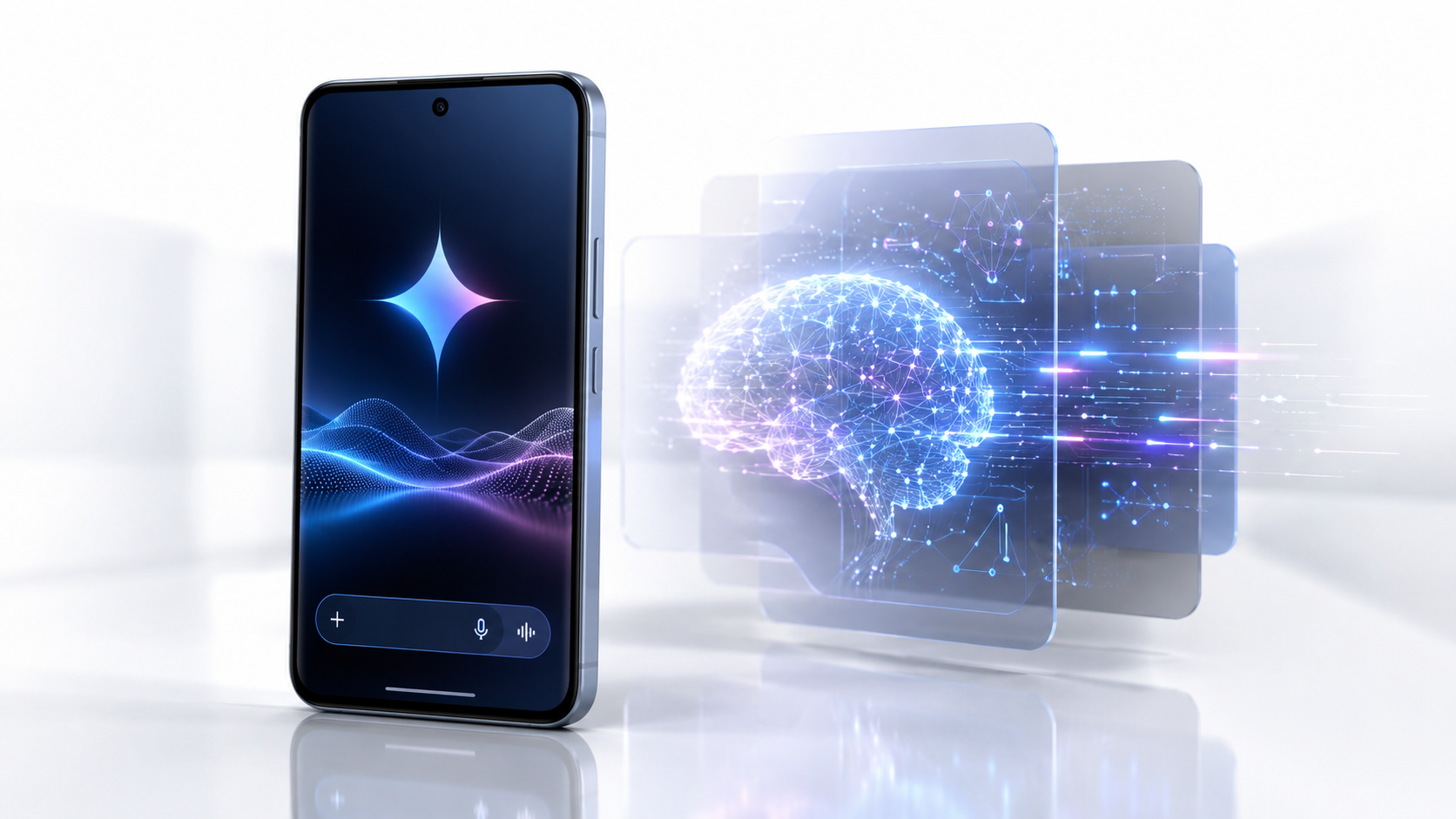
Google’s AI strategy isn’t just about releasing bigger language models anymore. The company’s latest announcement focuses on something users notice every day: speed, responsiveness, and efficiency.
On July 21, Google officially introduced Gemini 3.6 Flash, Gemini 3.5 Flash-Lite, and Gemini 3.5 Flash Cyber, while confirming that its flagship Gemini 3.5 Pro is still being tested and has not yet received a public release date. (blog.google)
For Android users, this announcement matters more than benchmark scores. Faster AI models can make voice assistants respond quicker, reduce waiting time for AI-powered searches, improve image understanding, and potentially lower the cost of delivering AI features across Google services.
In this guide, we’ll explain what has actually changed, what remains speculation, and why these new models could quietly improve your everyday smartphone experience.
What Google Officially Announced
Google has confirmed three new AI models:
- Gemini 3.6 Flash
- Gemini 3.5 Flash-Lite
- Gemini 3.5 Flash Cyber
The company says Gemini 3.6 Flash becomes its primary “workhorse” model, replacing Gemini 3.5 Flash for many production workloads. According to Google, it delivers stronger reasoning, improved multimodal understanding, and better coding performance while using fewer output tokens than its predecessor. (blog.google)
Meanwhile, Gemini 3.5 Flash-Lite targets high-speed, low-cost tasks such as document processing, AI search, and lightweight assistants.
What’s confirmed
- Gemini 3.6 Flash is available now.
- Gemini 3.5 Flash-Lite is generally available.
- Gemini 3.5 Pro remains delayed.
- Google plans to release Gemini 3.5 Pro later but has not announced a launch date. (blog.google)
Source Reliability: High (Official Google announcement)
Voltixaz Analysis
Google’s biggest improvement isn’t necessarily intelligence—it’s efficiency. Most smartphone users don’t care which AI model answers a question. They care whether the answer appears instantly. Lower latency and better efficiency are likely to have a greater impact on daily usability than incremental benchmark gains.
Gemini 3.6 Flash vs Gemini 3.5 Flash-Lite
| Feature | Gemini 3.6 Flash | Gemini 3.5 Flash-Lite |
|---|---|---|
| Primary Goal | Balanced intelligence | Maximum speed |
| Best For | AI assistant, multimodal tasks | Search, summaries, background AI |
| Performance | Higher reasoning quality | Faster responses |
| Cost | Lower than previous Flash | Lowest in the 3.5 family |
| Android Impact | Better AI interactions | Faster everyday features |
Google says Gemini 3.6 Flash reduces token usage by roughly 17% compared with Gemini 3.5 Flash while improving performance on several internal and public benchmarks. (blog.google)
For users, fewer tokens generally translate into lower operating costs for Google and potentially more AI-powered features across its products.
Voltixaz Analysis
This release suggests Google is optimizing for scale rather than chasing the highest benchmark numbers. Lower-cost models allow AI features to be deployed to more users without dramatically increasing infrastructure costs.
How These Models Could Improve Your Android Phone
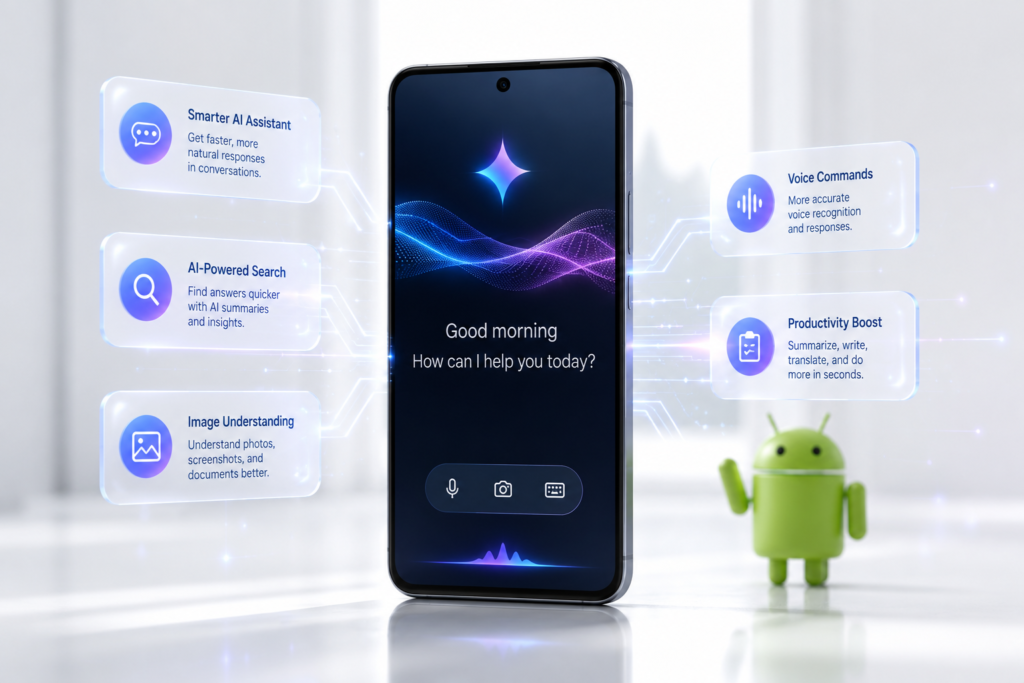
Most people won’t install Gemini 3.6 Flash manually.
Instead, improvements will arrive through Google’s ecosystem.
Potential areas include:
Faster Gemini Assistant
Responses should appear quicker while maintaining similar or slightly better quality.
Better AI Search
Google has confirmed that Flash-Lite is rolling out within Google Search, making AI-powered responses faster for high-volume workloads. (blog.google)
Improved Image Understanding
Gemini 3.6 Flash includes stronger multimodal capabilities, meaning it should better interpret screenshots, photos, and documents.
More Reliable Voice Commands
Lower latency makes conversations feel more natural, particularly when multiple AI operations happen during a single request.
Longer Battery Impact? Probably Minimal
The AI computation still primarily occurs in Google’s cloud rather than on your phone, so users shouldn’t expect noticeable battery improvements directly from these models.
Voltixaz Analysis
The biggest user-visible improvement is likely to be responsiveness rather than intelligence. AI that answers in one second instead of three seconds feels significantly more useful, even if the answer quality changes only slightly.
What Isn’t Changing
Some expectations should be kept realistic.
These updates do not automatically mean:
- Your phone suddenly becomes smarter overnight.
- Existing Android devices gain new hardware capabilities.
- Offline AI processing dramatically improves.
- Every Android app instantly upgrades.
Manufacturers still need to integrate these models into their own software experiences.
Voltixaz Analysis
Google’s cloud models evolve much faster than Android firmware. As a result, Pixel devices and Google’s own apps usually receive new AI capabilities before many third-party Android manufacturers.
Why Is Gemini 3.5 Pro Still Delayed?
Google originally indicated Gemini 3.5 Pro would arrive after I/O, but it has not yet launched broadly.
Reports suggest Google is continuing to improve coding performance before release. Google itself says the model remains in partner testing and will arrive later. (in.marketscreener.com)
Confirmed
- The model is delayed.
- Google continues testing.
Reported
- Internal development reportedly focused on improving coding quality before launch.
Speculation
There is no official evidence that the delay indicates major technical problems or cancellation.
Source Reliability
| Information | Reliability |
|---|---|
| Official delay | High |
| Coding optimization reports | Medium |
| Competitive pressure theories | Low |
Voltixaz Analysis
Waiting to ship a stronger flagship model may ultimately benefit users more than releasing it prematurely. AI models are increasingly judged by reliability in real-world tasks, not just benchmark scores.
Comparison With Previous Generation
| Feature | Gemini 3.5 Flash | Gemini 3.6 Flash |
|---|---|---|
| Speed | Fast | Faster |
| Token Efficiency | Good | Better |
| Coding | Improved | Improved further |
| Multimodal | Strong | Stronger |
| AI Assistant Experience | Excellent | More responsive |
Pros & Cons
Pros
- Faster AI responses
- Better efficiency
- Improved multimodal understanding
- Lower operating cost
- Likely wider deployment across Google services
Cons
- Improvements may be subtle for casual users
- Many benefits depend on cloud connectivity
- Third-party Android brands may take time to adopt updates
- Gemini 3.5 Pro remains unavailable
Who Should Care?
- Pixel users
- Gemini app users
- Google Search AI users
- Android users relying on AI productivity tools
- Developers building AI-powered Android apps
Who Should Skip?
If you rarely use AI features or primarily use offline smartphone functions, these updates are unlikely to change your daily experience immediately.
Expert Tips
- Keep the Gemini app updated to receive new model improvements as they roll out.
- Try AI-powered Search and document summaries to notice speed gains.
- Remember that cloud AI quality depends on internet connectivity.
- Don’t judge AI upgrades solely by benchmark charts—real-world responsiveness matters more.
Gemini 3.6 Flash represents an evolutionary upgrade rather than a revolutionary one, but it’s an important step for Google’s AI ecosystem. Instead of focusing exclusively on raw capability, Google is improving efficiency, latency, and deployment costs—changes that can make AI features feel faster and more reliable across Android phones, Search, and the Gemini app. (blog.google)
The delayed arrival of Gemini 3.5 Pro means Google’s highest-end model is still on the horizon, but the Flash family already demonstrates where Google’s priorities lie: delivering practical AI improvements that can scale to millions of users.
For most Android users, the biggest difference won’t be a new feature—it will be AI that simply feels quicker and more responsive.
FAQs
1. What is Gemini 3.6 Flash?
Google’s newest general-purpose Flash AI model focused on faster, more efficient AI performance.
2. Is Gemini 3.6 Flash available now?
Yes. Google has made it generally available through the Gemini ecosystem. (ai.google.dev)
3. What is Gemini 3.5 Flash-Lite?
A lightweight model optimized for speed, low latency, and high-volume AI tasks.
4. Will my Android phone automatically receive it?
If you use Google’s AI services, improvements may arrive through app and server-side updates rather than Android OS updates.
5. Does Gemini 3.6 Flash run on-device?
Mostly no. These models primarily operate in Google’s cloud.
6. Why is Gemini 3.5 Pro delayed?
Google says it is still being tested, while reports indicate additional work on coding performance. (in.marketscreener.com)
7. Will AI become faster on Google Search?
Yes. Google has confirmed Flash-Lite is rolling out for Search workloads. (blog.google)
8. Is this update only for Pixel phones?
No. Google services using Gemini can benefit across supported Android devices.
9. Should I wait for Gemini 3.5 Pro?
If you’re an everyday user, the Flash improvements are already meaningful. Developers and power users may want to see what 3.5 Pro offers once released.
Internal Link Suggestion
- AI News →
/artificial-intelligence/ - Tech News →
/tech-news/ - Reviews →
/reviews-buying-guides/