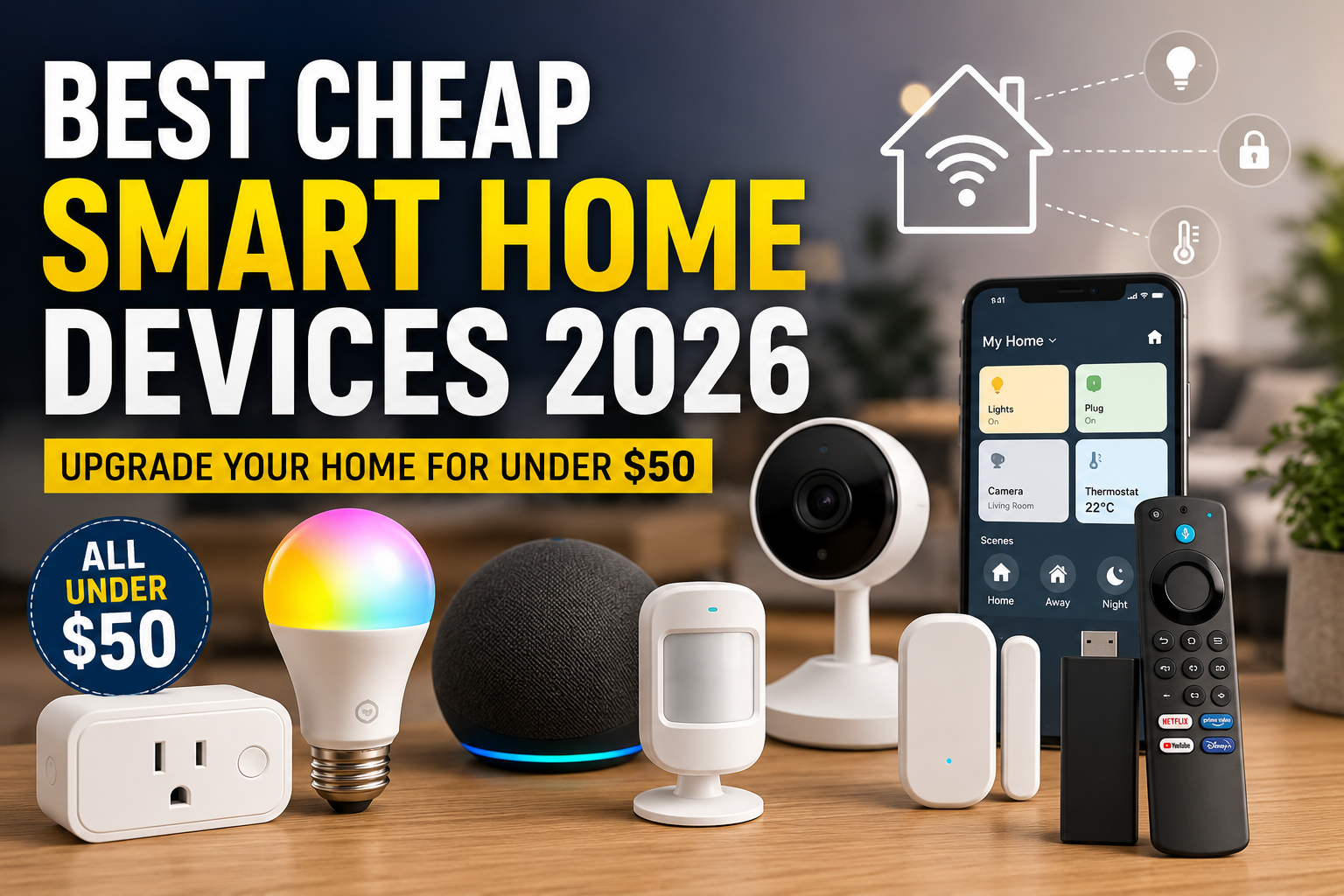
Best Cheap Smart Home Devices 2026: Upgrade Your Home for Under $50
Smart home technology has become more affordable than ever in 2026. A few years ago, creating a connected home required expensive hubs, professional installation, and a significant investment. Today, you can automate your lights, improve your home’s security, control appliances remotely, and even save energy without spending more than $50 on a single device.
Whether you’re living in a house, apartment, or rental property, budget-friendly smart home gadgets provide an easy way to make everyday life more convenient. Most of these devices connect directly to your home’s Wi-Fi network, can be installed within minutes, and work seamlessly with popular voice assistants like Amazon Alexa, Google Assistant, and Apple HomeKit.
If you’re planning to build your first smart home or simply want to add a few useful gadgets without overspending, this guide will help you choose the best affordable smart home devices available in 2026.
Why Budget Smart Home Devices Are Worth Buying
One of the biggest misconceptions about smart homes is that they are only for luxury houses. In reality, many of today’s affordable smart devices offer features that were previously found only in premium products. Manufacturers have made significant improvements in connectivity, security, and software support while reducing prices.
Budget smart home devices help simplify everyday routines. Imagine your lights automatically turning on when you arrive home, your coffee maker starting before you wake up, or receiving a notification if someone opens your front door while you’re away. These small conveniences can make a noticeable difference in your daily life while also helping reduce electricity consumption.
Another advantage is flexibility. You don’t have to purchase everything at once. Most people start with one or two devices and gradually expand their smart home ecosystem over time.
Smart Wi-Fi Plugs: The Best First Smart Home Purchase
If you’ve never owned a smart home device before, a smart Wi-Fi plug is the perfect place to start. These inexpensive gadgets plug into a regular electrical outlet and allow you to control almost any connected appliance using your smartphone or voice assistant.
Once connected, you can remotely switch lamps, coffee makers, electric kettles, fans, humidifiers, and many other household devices on or off. Most smart plugs also allow you to create schedules so your appliances operate automatically throughout the day.
Many models available in 2026 also include energy monitoring, allowing homeowners to track electricity usage and identify appliances that consume excessive power. This feature not only improves convenience but can also help reduce monthly electricity bills.
Smart LED Bulbs Bring New Life to Any Room
Smart lighting remains one of the most popular smart home upgrades because it completely changes the atmosphere of a room without requiring complicated installation.
Modern smart bulbs offer adjustable brightness, millions of color options, warm and cool white lighting, and programmable schedules. You can create relaxing evening lighting, bright workspaces, or colorful entertainment setups using only a mobile app.
Many affordable smart bulbs now support Matter, making them compatible with multiple smart home ecosystems. This means you won’t be locked into a single platform if you decide to expand your smart home in the future.
For less than $20, upgrading a bedroom or living room with smart lighting is one of the most noticeable improvements you can make.
Smart Streaming Devices Make Older TVs Feel Brand New
Not everyone needs to purchase an expensive smart television. Streaming devices continue to be among the best technology purchases under $50 because they instantly transform older televisions into modern entertainment centers.
Today’s streaming sticks support 4K video, HDR content, voice search, personalized recommendations, and access to virtually every major streaming platform. Many also integrate directly with your smart home, allowing you to control lights, cameras, and other connected devices from your television screen.
If your current TV still works perfectly but feels outdated, a streaming device offers one of the best value upgrades available.
Indoor Smart Security Cameras Improve Peace of Mind
Home security no longer requires expensive surveillance systems. Budget indoor smart cameras now include features that were previously reserved for premium models.
Most cameras under $50 provide Full HD recording, night vision, motion detection, two-way audio, and instant smartphone notifications. Some models can even distinguish between people and pets, reducing unnecessary alerts throughout the day.
These cameras are useful for monitoring children, checking on elderly family members, watching pets while you’re at work, or simply keeping an eye on your home during vacations.
Although many manufacturers offer optional cloud storage subscriptions, several devices now support local storage, allowing users to avoid monthly fees.
Smart Speakers Become the Center of Your Connected Home
A smart speaker acts as the command center for your entire smart home. Instead of opening different apps, you can simply ask your voice assistant to control lights, adjust routines, play music, answer questions, or provide weather updates.
Even entry-level smart speakers now deliver surprisingly good sound quality while supporting hundreds of smart home products. They also allow multiple devices to work together through automation routines.
For example, one simple voice command can switch off every light, lock compatible smart locks, adjust smart thermostats, and play relaxing music before bedtime.
This level of convenience makes smart speakers one of the highest-value purchases for anyone beginning their smart home journey.
Smart Motion Sensors Add True Automation
Many people think smart homes are only about voice commands, but automation is what truly makes a home intelligent.
Motion sensors automatically detect movement and trigger other connected devices. Lights can switch on when someone enters a hallway, security cameras can begin recording, or notifications can be sent whenever unexpected movement is detected while you’re away.
Modern sensors are extremely small, battery-powered, and easy to install without drilling holes or running cables.
Because they work quietly in the background, motion sensors often become one of the most useful smart home additions after installation.
Door and Window Sensors Increase Home Security
Door and window sensors are inexpensive devices that monitor entry points throughout your home.
Whenever a door or window is opened, you’ll receive an instant notification on your smartphone. This provides additional security while traveling and can also help monitor children’s movements or remind you if a window has been left open before leaving home.
Many homeowners combine these sensors with smart lights or security cameras to create automated security routines that activate whenever someone enters the house.
Despite their simple design, these sensors provide excellent value for their affordable price.
Smart Temperature and Humidity Sensors Help Maintain Comfort
Indoor climate affects comfort, sleep quality, and even the lifespan of furniture and electronics.
Temperature and humidity sensors continuously monitor environmental conditions inside your home and notify you whenever readings move outside your preferred range.
These sensors are particularly useful in baby rooms, bedrooms, wine storage areas, home offices, and greenhouses where maintaining stable conditions is important.
When connected to compatible smart devices, they can automatically activate humidifiers, fans, or air conditioners without requiring manual adjustments.
Smart IR Controllers Modernize Older Appliances
Not every household appliance is smart, but that doesn’t mean it can’t become part of your connected home.
Smart infrared controllers can operate traditional televisions, air conditioners, ceiling fans, sound systems, and other electronics that normally rely on infrared remote controls.
Instead of managing multiple remotes, users can control nearly everything from one smartphone app or through voice commands.
This is an affordable way to modernize existing electronics without replacing perfectly functional appliances.
Water Leak Sensors Can Prevent Costly Damage
Water leaks often go unnoticed until serious damage has already occurred.
Affordable leak sensors are designed to detect even small amounts of moisture around washing machines, water heaters, sinks, bathrooms, and basements.
If water is detected, the sensor immediately sends a notification to your smartphone, allowing you to respond before a minor leak becomes an expensive repair.
Considering the potential cost of water damage, these small devices offer exceptional value despite their low price.
Things to Consider Before Buying
Choosing the right smart home device involves more than simply finding the lowest price. Compatibility should always be your first consideration. Purchasing devices that work with the same ecosystem, whether it is Amazon Alexa, Google Home, Apple HomeKit, or Matter, makes future expansion much easier.
It is also worth checking whether the device connects directly to Wi-Fi or requires an additional hub. Most affordable products available in 2026 connect directly to your home network, reducing installation costs and simplifying setup.
Software support is another important factor. Reputable manufacturers regularly release firmware updates that improve security, add new features, and fix bugs. Spending a few extra dollars on a trusted brand often provides a much better long-term experience.
Finally, consider whether the device requires a monthly subscription. While many products function perfectly without ongoing fees, some security cameras limit cloud storage or advanced detection features unless you subscribe to a paid service.
Are Cheap Smart Home Devices Reliable?
The quality of budget smart home products has improved dramatically over the past few years. Affordable no longer means unreliable. Many devices under $50 now offer dependable Wi-Fi connectivity, responsive mobile apps, regular software updates, and support for the latest smart home standards.
When purchased from well-known brands, these products can easily last for years while providing a smart home experience that rivals much more expensive systems.
For most homeowners, the biggest difference between budget and premium devices is not reliability but additional convenience features such as higher-quality materials, longer battery life, or advanced AI capabilities.
Final Verdict
Building a smart home in 2026 is no longer reserved for technology enthusiasts with large budgets. Affordable smart home devices have become more powerful, easier to install, and compatible with nearly every major smart home platform.
If you’re starting from scratch, a smart Wi-Fi plug is the best first purchase because it offers immediate convenience at a very low cost. Smart LED bulbs are another excellent investment, transforming the atmosphere of your home while reducing energy consumption. For those interested in entertainment, a streaming device provides incredible value, while indoor security cameras and leak sensors add an extra layer of safety.
Instead of trying to automate your entire home at once, begin with one or two practical devices that solve everyday problems. As your needs grow, you can gradually expand your setup into a fully connected smart home without ever exceeding your budget.
The best part is that many of the smartest upgrades available in 2026 cost less than a family dinner, making now the perfect time to experience the convenience of smart home technology.
Frequently Asked Questions
1. What is the best smart home device under $50?
A smart Wi-Fi plug is widely considered the best budget smart home device because it can automate lamps, fans, coffee makers, and many other household appliances while requiring almost no setup.
2. Do I need a smart home hub?
Most affordable smart home devices available in 2026 connect directly to Wi-Fi, meaning a separate hub is usually unnecessary.
3. Can budget smart home devices work together?
Yes. As long as the devices support the same ecosystem or Matter standard, they can be combined into routines and automations using a single mobile app or voice assistant.
4. Are smart home devices difficult to install?
No. Most modern devices are designed for beginners and can usually be installed and configured in less than ten minutes using a smartphone app.
5. Which smart home ecosystem is best?
Amazon Alexa and Google Home remain excellent choices for most users because they support thousands of compatible devices. Apple HomeKit is ideal for users already invested in the Apple ecosystem and who prioritize privacy.
Related Atricles
- Best Power Banks 2026: Fast Charging, Multi-Port, and Travel-Friendly Picks
- Anker Nano Power Bank Review: Is the 10,000mAh Pick Still Worth It?
- Best Smart Glasses Under $100 in 2026: Budget Buying Guide
- Best Noise Cancelling Headphones 2026: Tested and Ranked
- Nothing Ear 3(a): What to Expect From the Newest Budget Earbuds