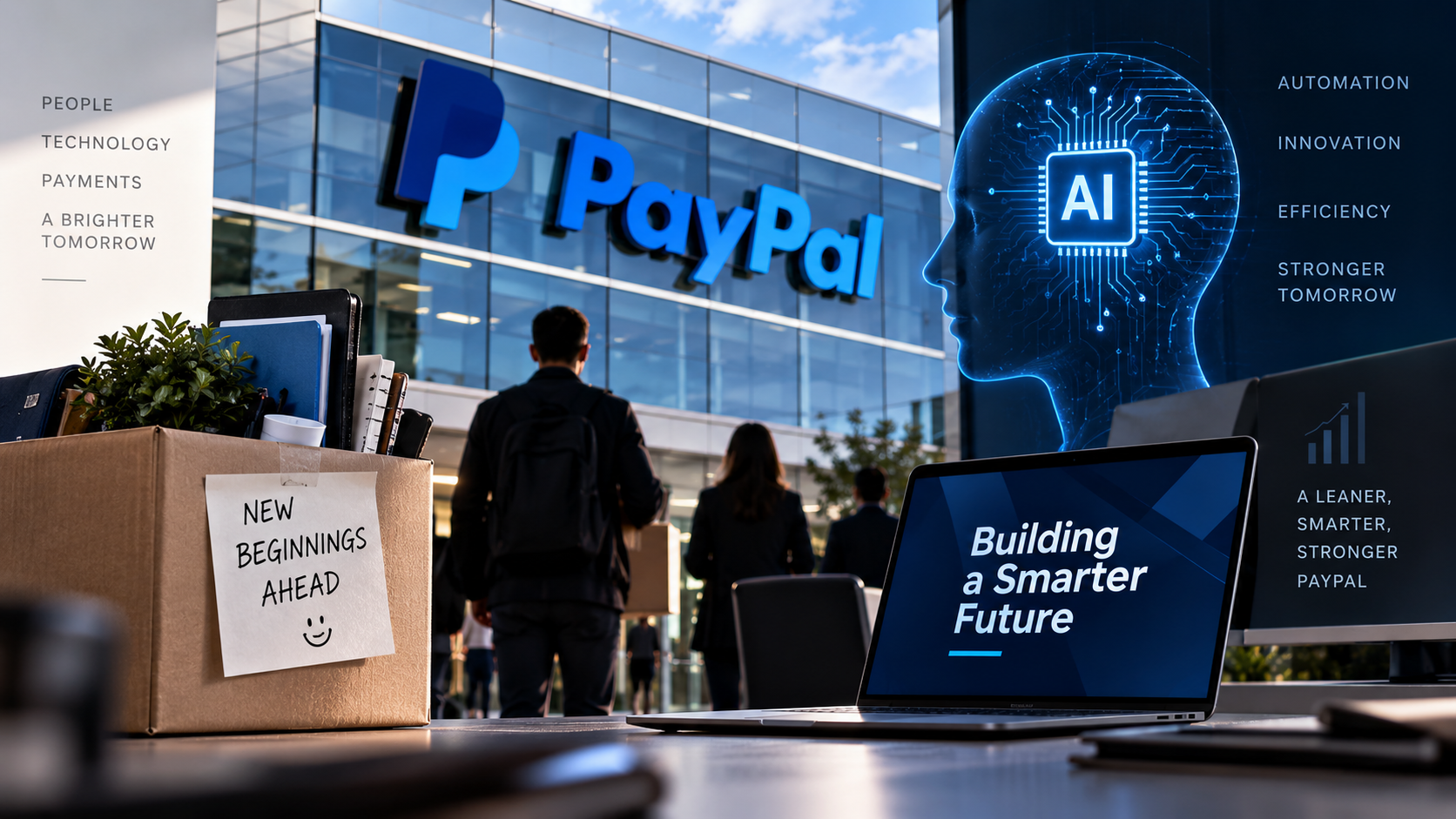
The PayPal Layoffs 2026 have become one of the biggest stories in the fintech industry this year. The digital payments giant is eliminating hundreds of jobs across multiple countries as part of a long-term restructuring strategy designed to improve efficiency, reduce operating costs, and accelerate investment in artificial intelligence (AI). While layoffs are never easy for employees, PayPal says these changes are part of a carefully planned transformation rather than a sign of financial instability.
Reports indicate that around 220 employees in India and 251 employees at PayPal’s San Jose headquarters in California are among those affected. The company has stated that these workforce reductions are part of a previously announced multi-year business transformation plan. The goal is to simplify operations, improve productivity, and position PayPal for long-term growth in an increasingly competitive digital payments market.
What Are PayPal Layoffs 2026?
The latest PayPal Layoffs 2026 are part of the company’s effort to reshape its business after several years of rapid growth followed by changing market conditions. Instead of reacting to a financial crisis, PayPal is reorganizing its workforce to become more efficient and focus resources on innovation.
The company remains one of the world’s leading digital payment platforms, serving hundreds of millions of customers and millions of merchants globally. However, as competition continues to increase, PayPal believes a leaner organizational structure will help it move faster and deliver better products.
Why Is PayPal Cutting Jobs?
According to company statements and industry reports, the layoffs are driven by several key factors.
First, PayPal aims to reduce operating expenses while improving profitability. The company expects to save approximately $400 million this year and more than $1.5 billion over the next few years through operational improvements and restructuring.
Second, PayPal wants to simplify its internal structure by reducing management layers and improving decision-making. A more streamlined organization can respond faster to customer needs and market changes.
Finally, artificial intelligence has become a major priority. The company is investing heavily in AI-powered fraud detection, smarter checkout experiences, automated customer support, personalized shopping recommendations, and internal productivity tools. As automation becomes more advanced, some traditional operational roles are no longer required.
Which Offices Are Affected?
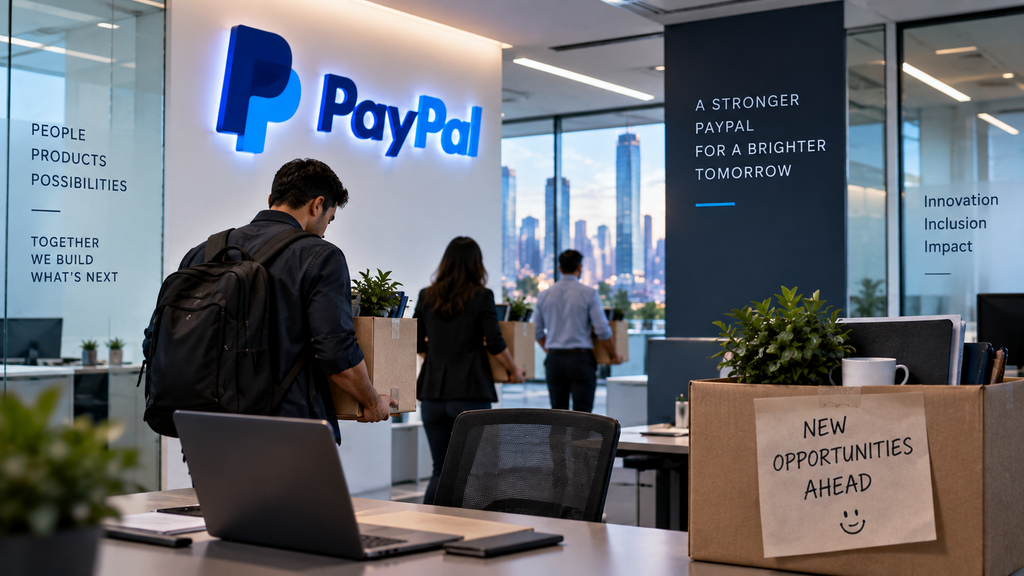
The restructuring affects multiple regions around the world.
In India, approximately 220 employees have reportedly been impacted across PayPal’s technology and operations teams. India remains one of PayPal’s largest engineering hubs, and the company continues to invest in software development despite the workforce reduction.
In the United States, PayPal confirmed through California’s WARN filing that 251 positions at its San Jose headquarters will be eliminated. Previous restructuring efforts have also affected employees in Europe and other international locations.
Although the layoffs are significant, PayPal has emphasized that they are part of a long-term business strategy rather than an emergency cost-cutting exercise.
How AI Is Transforming PayPal

Artificial intelligence is becoming one of the most important parts of PayPal’s future strategy.
The company is using AI to improve fraud prevention, identify suspicious transactions more accurately, personalize customer experiences, automate routine support requests, and help merchants better understand customer behavior. AI also enables faster payment processing and more intelligent risk management, making digital transactions safer and more efficient.
PayPal believes these investments will strengthen its competitive position while improving the experience for both consumers and businesses. As AI becomes more integrated into financial services, companies across the fintech industry are making similar investments.
Growing Competition in Digital Payments
PayPal is no longer the only major player in digital payments. It now competes with companies such as Apple Pay, Google Pay, Stripe, Block (formerly Square), Klarna, Adyen, and Amazon Pay. Many of these competitors are introducing AI-powered features and expanding their payment ecosystems.
To maintain its leadership position, PayPal is focusing on innovation, operational efficiency, and faster product development. The restructuring is intended to free up resources that can be invested in technologies expected to drive future growth.
Impact on Employees
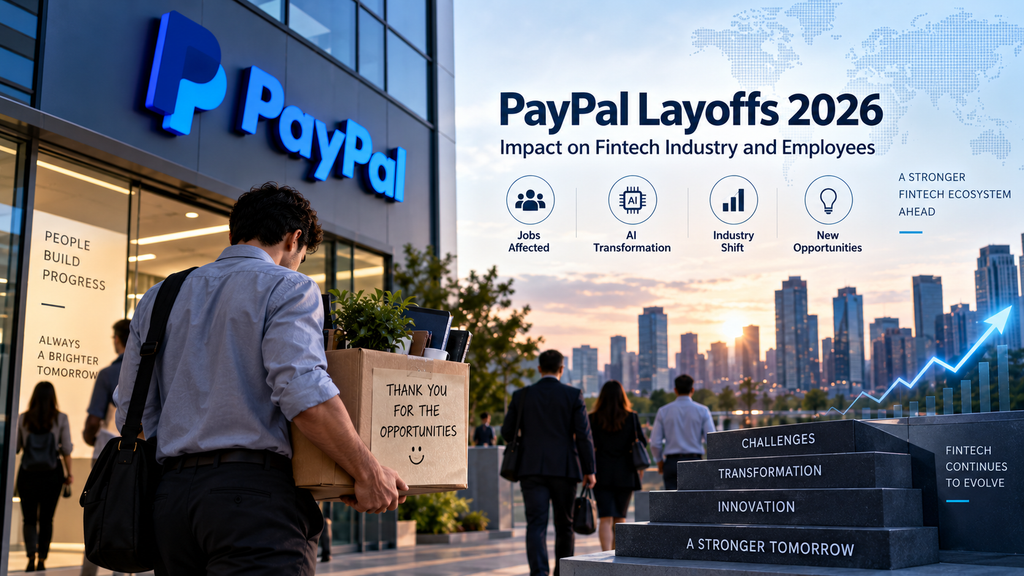
Workforce reductions always create uncertainty for employees and their families. PayPal has stated that affected workers will receive support based on local employment regulations, which may include severance packages, career transition assistance, and job placement services.
While the restructuring is challenging, the company says it remains committed to supporting employees throughout the transition and continuing to hire in strategic areas related to engineering, AI, and product development.
What This Means for PayPal’s Future
Industry analysts generally believe the restructuring reflects a strategic shift rather than financial weakness. Under CEO Alex Chriss, PayPal is focusing on becoming a faster, more efficient, and AI-driven company.
As digital commerce continues to evolve, PayPal plans to invest more heavily in intelligent payment solutions, merchant services, cross-border transactions, and advanced financial technologies. If executed successfully, the company’s transformation could strengthen its position in the rapidly changing fintech landscape.
However, success will depend on PayPal’s ability to balance innovation with employee morale while continuing to deliver reliable services to its global customer base.
Final Thoughts
The PayPal Layoffs 2026 highlight how rapidly the technology and financial services industries are changing. Rather than simply reducing costs, PayPal is reshaping its business around artificial intelligence, automation, and operational efficiency.
Although the layoffs affect hundreds of employees, they are part of a broader strategy aimed at ensuring the company remains competitive in an industry where innovation is moving faster than ever before. As AI continues to transform digital payments, PayPal’s restructuring may become a model for how established fintech companies adapt to the future.
Suggested Internal Links
- AI News →
/artificial-intelligence/ - Tech News →
/tech-news/ - Reviews →
/reviews-buying-guides/