For years, action cameras have improved through software rather than major hardware changes. Better stabilization, smarter AI, and higher frame rates became the norm, while image sensors remained relatively small. The GoPro Mission 1 Pro changes that formula with a significantly larger 1-inch sensor and the company’s new GP3 processor, positioning itself as more than just another adventure camera. Officially, GoPro says the new platform delivers improved low-light performance, higher resolutions, and longer runtimes. (gopro.com)
The question isn’t whether the specifications look impressive—they do. The real question is whether those upgrades justify the considerably higher asking price.
This review examines the camera from a practical perspective, focusing on who will actually benefit from the new hardware and where its limitations remain.
Design and Build Quality
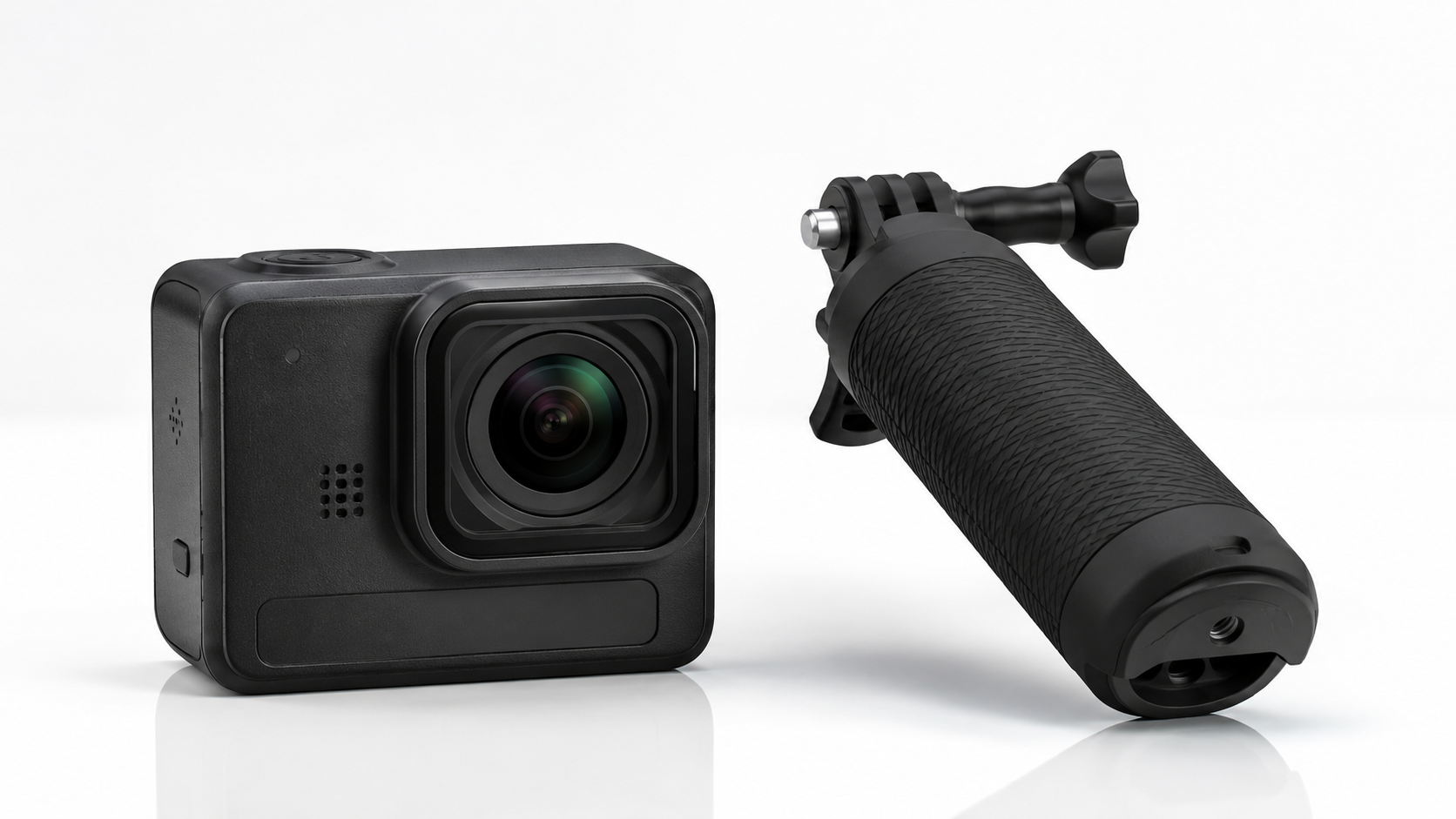
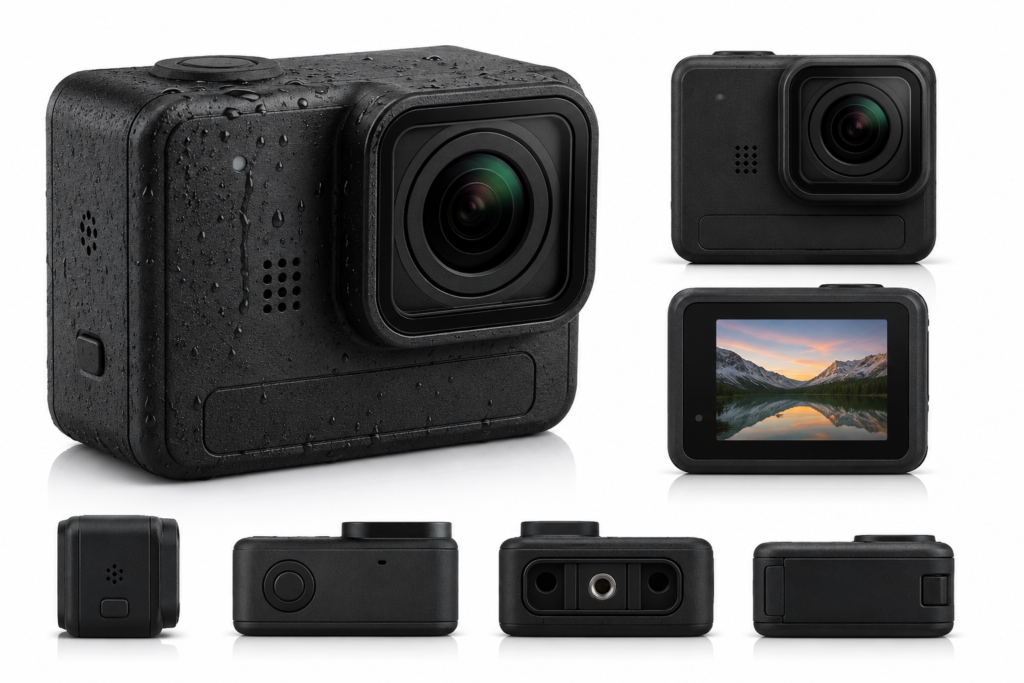
The Mission 1 Pro still feels unmistakably like a GoPro, but it is noticeably larger than previous Hero cameras. The increased size mainly accommodates the larger imaging sensor and redesigned optics.
Despite the extra bulk, the camera remains waterproof, rugged, and designed for demanding outdoor environments. Physical buttons are easier to locate with gloves, while the larger displays improve usability during handheld shooting. (engadget.com)
For cyclists, skiers, or creators mounting the camera to vehicles, the additional size is unlikely to matter. Helmet users, however, may notice the extra weight during long recording sessions.
Voltixaz Analysis
The larger body isn’t simply a cosmetic redesign. A bigger sensor requires larger optics and additional cooling. This represents a shift from “smallest possible action camera” toward “highest image quality possible.”
Creators prioritizing video quality will appreciate the trade-off, while extreme sports users may still prefer lighter cameras.
The New 1-Inch Sensor: Why It Actually Matters
The headline feature is undoubtedly the new 50MP 1-inch image sensor.
A larger sensor captures considerably more light than smaller sensors commonly found in traditional action cameras.
In practical use, that means:
- Cleaner footage indoors
- Better dynamic range
- Improved shadow detail
- Less digital noise
- More natural-looking colors
Instead of relying heavily on aggressive noise reduction software, the camera begins with better image data.
This difference becomes especially noticeable around sunrise, sunset, forests, cloudy weather, and indoor environments.
Voltixaz Analysis
Many buyers mistakenly assume “1-inch sensor” only means higher resolution.
The real benefit isn’t 50MP photography.
It’s cleaner pixels.
For video creators, improved low-light performance is far more valuable than simply recording at 8K.
GP3 Processor Performance
GoPro’s new GP3 processor is equally important.
According to GoPro, the new chip doubles image-processing capability while enabling:
- 8K60 recording
- 4K240 slow motion
- 1080p960 super slow motion
- Better thermal efficiency
- Longer battery life
These improvements aren’t only about speed.
Higher processing bandwidth allows the camera to apply stabilization, HDR, and color processing simultaneously without overwhelming the hardware. (gopro.com)
Voltixaz Analysis
Processors rarely receive much attention in camera launches, but GP3 may ultimately prove to be the more important upgrade.
A faster imaging pipeline affects virtually every recording mode—not just benchmark numbers.
Video Quality
This is where Mission 1 Pro genuinely separates itself from earlier GoPro models.
Highlights include:
| Feature | Mission 1 Pro |
|---|---|
| Sensor | 1-inch 50MP |
| Maximum Resolution | 8K60 |
| Slow Motion | 4K240 |
| Open Gate | Yes |
| RAW Video Support | GP-Log2 |
| HDR | HLG HDR |
The additional resolution provides flexibility for cropping 8K footage into multiple 4K outputs or creating vertical videos without sacrificing quality.
Color reproduction appears more natural than previous GoPro generations, particularly when shooting landscapes.
Low-light performance also sees one of the biggest improvements ever delivered in a GoPro product. Independent reviewers consistently found it to outperform earlier Hero models and compete much more effectively against rival action cameras in dim environments, though it still isn’t a substitute for larger mirrorless cameras. (engadget.com)
Voltixaz Analysis
Most people won’t publish in 8K.
Ironically, that’s exactly why 8K is valuable.
It gives creators significantly more flexibility during editing, reframing, stabilization, and vertical content production.
Photo Quality
The Mission 1 Pro captures 50MP RAW photographs with noticeably improved dynamic range compared with previous Hero models.
Landscape photographers benefit the most.
However, the fixed-focus lens still limits creative flexibility compared to mirrorless cameras.
Close-up subjects may require more careful positioning due to the longer minimum focus distance introduced by the larger sensor. (petapixel.com)
Voltixaz Analysis
If photography is your primary goal, a dedicated compact or mirrorless camera remains the better choice.
The Mission 1 Pro excels because it combines very capable photography with outstanding action video.
Battery Life
GoPro pairs the new hardware with an upgraded Enduro battery.
Despite the larger sensor and increased processing demands, battery performance appears improved over previous Hero generations thanks to GP3’s efficiency. Official materials emphasize longer runtimes and better thermal behavior, and reviewers report being able to shoot through full days of mixed use, with heavy 8K recording remaining the biggest drain. (gopro.com)
Voltixaz Analysis
Battery life is often overlooked during product launches.
For travel creators, longer recording sessions can be more valuable than adding another recording mode.
Grip Accessory Review
One of the more interesting additions is the new Grip accessory.
Rather than functioning only as a handle, it also acts as a protective cage while providing multiple mounting options.
It significantly improves handheld ergonomics for:
- Travel creators
- Street videographers
- Daily vloggers
Instead of feeling like a tiny action camera, the Mission 1 Pro begins behaving more like a compact cinema camera. GoPro offers Grip Edition bundles specifically around this concept. (gopro.com)
Voltixaz Analysis
The Grip accessory makes more sense than it first appears.
As cameras become larger and more cinema-focused, better ergonomics become increasingly valuable.
Mission 1 Pro vs Hero 13 Black
| Feature | Mission 1 Pro | Hero 13 Black |
|---|---|---|
| Sensor | 1-inch | Smaller sensor |
| Processor | GP3 | Previous generation |
| Max Video | 8K60 | Lower maximum resolution |
| Low-Light | Excellent | Average |
| Dynamic Range | Much Better | Good |
| Battery | Improved | Good |
| Price | Premium | Lower |
The Hero 13 Black still offers excellent value for casual users.
Mission 1 Pro targets creators seeking maximum image quality rather than the lowest cost.
Pros
- Outstanding 1-inch sensor
- Excellent low-light performance
- Impressive 8K recording
- Strong stabilization
- Improved battery efficiency
- Useful Grip accessory
- Larger displays
Cons
- Premium pricing
- Larger and heavier body
- Fixed-focus limitations
- 8K files require powerful editing hardware
Who Should Buy?
Mission 1 Pro is ideal for:
- Professional content creators
- Travel filmmakers
- Adventure videographers
- Documentary shooters
- YouTubers wanting maximum image quality
Who Should Skip?
Consider another option if you:
- Mostly record casual vacations
- Upload only short social clips
- Already own a Hero 13 Black and rarely shoot in low light
- Have a limited budget
Expert Tips
- Record in GP-Log2 for greater flexibility during color grading.
- Use 8K selectively; for many creators, 4K offers an excellent balance of quality, file size, and editing speed.
- Pair the Grip accessory with handheld shooting to improve stability and comfort.
- Carry additional Enduro batteries if you plan extended 8K sessions.
- Record in Open Gate when creating content for multiple platforms.
The Mission 1 Pro isn’t simply another annual GoPro refresh.
It represents the company’s most significant imaging upgrade in years.
The larger 1-inch sensor genuinely improves video quality, especially in challenging lighting conditions, while the GP3 processor enables capabilities that would have been difficult on previous hardware. Official specifications and early independent reviews consistently point to meaningful gains in image quality, stabilization, and endurance. (gopro.com)
That said, it is also GoPro’s most expensive mainstream camera.
For professional creators, filmmakers, and serious enthusiasts, the price is easier to justify because the improvements affect footage you can actually see—not just specification sheets.
Casual users, however, may find the Hero lineup continues to offer better overall value.
Overall Rating: 9.3/10
FAQs
1. Is the GoPro Mission 1 Pro worth buying?
Yes, if you prioritize professional-quality video, low-light performance, and advanced recording options.
2. Does the 1-inch sensor make a noticeable difference?
Yes. It improves dynamic range, noise performance, and image quality, particularly in difficult lighting.
3. Can it shoot true 8K video?
Yes. The Mission 1 Pro supports up to 8K at 60 fps. (gopro.com)
4. Is it waterproof?
Yes. It maintains GoPro’s rugged, waterproof design.
5. Is the Grip accessory necessary?
No, but it substantially improves handheld shooting comfort and versatility.
6. Does it replace a mirrorless camera?
Not entirely. It narrows the gap for video but still lacks interchangeable lenses and larger-sensor creative flexibility.
7. Is battery life better than previous GoPro models?
Yes. The GP3 processor and updated battery deliver improved efficiency. (forbes.com)
8. Is it good for beginners?
Yes, though beginners may find lower-priced GoPro models offer better value.
9. Can it record vertical videos?
Yes. It supports Open Gate recording, making vertical crops much easier. (gopro.com)
10. Is the Mission 1 Pro a worthwhile upgrade from Hero 13?
If you frequently shoot in low light or need higher-end production quality, yes. Otherwise, the upgrade is less compelling.