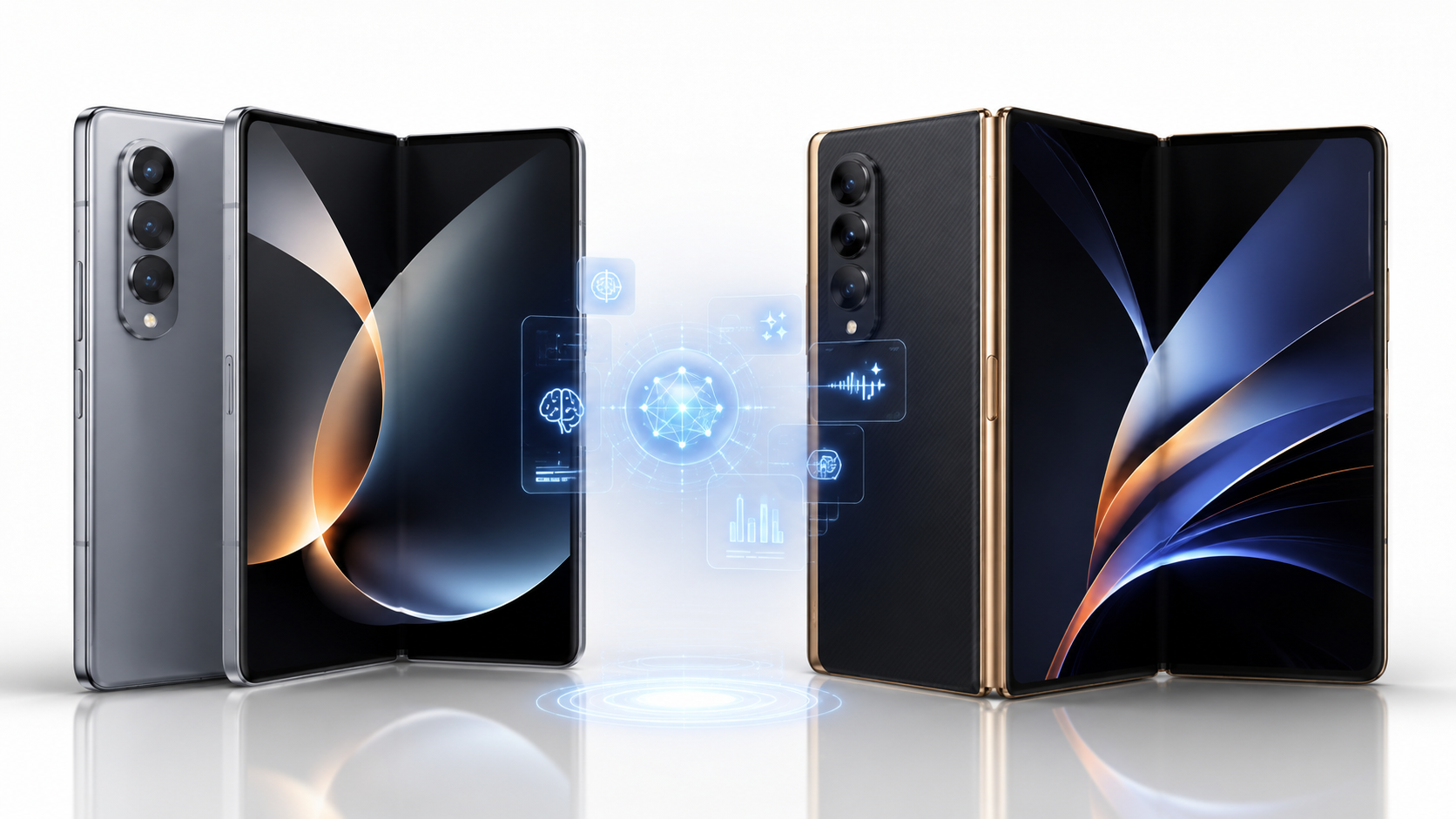
Samsung has done something it had never attempted before: launching two premium book-style foldables in the same generation. Instead of offering a single flagship foldable, buyers now have to choose between the Galaxy Z Fold 8 and the more premium Galaxy Z Fold 8 Ultra.
That creates a genuine buying dilemma. While both phones share Samsung’s foldable DNA, they target different audiences. The standard Fold 8 aims to balance flagship performance with a slightly lower price, while the Ultra model pushes camera hardware, display technology, AI capabilities, and premium materials further.
This guide explains the practical differences—not just the specifications—so you can decide whether paying extra for the Ultra makes sense.
Galaxy Z Fold 8 vs Z Fold 8 Ultra at a Glance
| Feature | Galaxy Z Fold 8 | Galaxy Z Fold 8 Ultra |
|---|---|---|
| Position | Premium Foldable | Ultra Premium Foldable |
| Display | Large AMOLED Foldable | Brighter AMOLED with premium tuning |
| Camera | Flagship Triple Camera | Upgraded flagship camera system |
| Build | Armor Aluminum | Titanium/Premium materials (market dependent) |
| AI Features | Galaxy AI | Galaxy AI + exclusive premium optimizations |
| Target Buyer | Most users | Power users & creators |
Specifications may vary depending on regional models.
Voltixaz Analysis
Samsung appears to be adopting the same strategy it uses for the Galaxy S series: offering a mainstream flagship alongside an Ultra model. That gives consumers more choice but also increases purchase complexity. The real difference isn’t whether one phone is “good” and the other “better”—it’s whether you’ll actually use the Ultra’s premium hardware enough to justify the higher cost.
Design and Build Quality
Both devices maintain Samsung’s refined book-style folding design with improved hinge engineering over previous generations.
The standard Galaxy Z Fold 8 focuses on reducing thickness and weight while remaining durable enough for daily use.
The Galaxy Z Fold 8 Ultra adds premium materials and subtle refinements. Depending on the market, buyers may see upgraded frame materials, improved durability, and a more luxurious finish.
In everyday use, both feel premium. The Ultra simply feels more exclusive.
Which feels better?
If your phone spends most of its time in a case, the design differences become less significant. If you prefer using your phone without a case, the Ultra’s premium construction becomes much easier to appreciate.
Voltixaz Analysis
Samsung has reached a point where foldable durability is no longer the biggest concern. Buyers are now paying for refinement rather than dramatic structural improvements. That’s a positive sign for the maturity of foldable smartphones.
Display Experience
Samsung continues to lead the foldable OLED market.
Both models feature:
- High-refresh-rate AMOLED displays
- Bright outdoor visibility
- Excellent HDR performance
- Smooth multitasking
The Ultra is expected to offer:
- Higher peak brightness
- Better color calibration
- Improved anti-reflective coating
- Slightly improved crease visibility
For watching movies, editing documents, or multitasking, both devices deliver an outstanding experience.
Voltixaz Analysis
Display improvements are becoming incremental rather than revolutionary. Unless you regularly use your foldable outdoors or for professional content work, the standard Fold 8 already delivers flagship-quality visuals.
Performance and Galaxy AI
Both phones are powered by Samsung’s latest flagship processor, making them among the fastest Android devices available.
Daily performance differences are minimal.
Tasks like:
- Gaming
- Video editing
- DeX
- AI photo editing
- Large file transfers
are handled effortlessly by both devices.
The Ultra may include:
- Better thermal management
- Larger RAM configurations
- Exclusive Galaxy AI enhancements
- More aggressive multitasking optimization
For most users, performance won’t be the deciding factor.
Voltixaz Analysis
Modern flagship processors are so powerful that the average user rarely reaches their limits. Samsung’s software optimization and Galaxy AI ecosystem are becoming more important than raw benchmark scores.
Camera Comparison
Camera quality is where the two phones begin to separate.
| Camera | Galaxy Z Fold 8 | Galaxy Z Fold 8 Ultra |
|---|---|---|
| Main Camera | Flagship sensor | Larger premium sensor |
| Ultra-wide | Yes | Improved |
| Telephoto | Yes | Higher-end zoom |
| Night Photography | Excellent | Better |
| Video | 4K/8K support | Better stabilization |
The Ultra is designed for users who treat their smartphone as their primary camera.
Expect improvements in:
- Low-light photography
- Portrait quality
- Zoom performance
- HDR processing
- Video stabilization
For social media, family photos, and everyday photography, the standard Fold 8 remains more than capable.
Voltixaz Analysis
Camera hardware continues to be one of the biggest reasons manufacturers introduce Ultra models. If photography isn’t one of your top priorities, spending significantly more for marginal image improvements may not deliver proportional value.
Battery Life and Charging
Samsung keeps battery optimization conservative across both devices.
Expect:
- All-day battery life
- Wireless charging
- Reverse wireless charging
- Intelligent battery management
Battery endurance depends more on screen brightness and multitasking than model choice.
The Ultra’s brighter display and more powerful camera system may offset any battery capacity improvements.
Voltixaz Analysis
Battery technology has improved more through software optimization than raw capacity. Buyers expecting dramatically longer battery life from the Ultra may be disappointed.
Software Experience
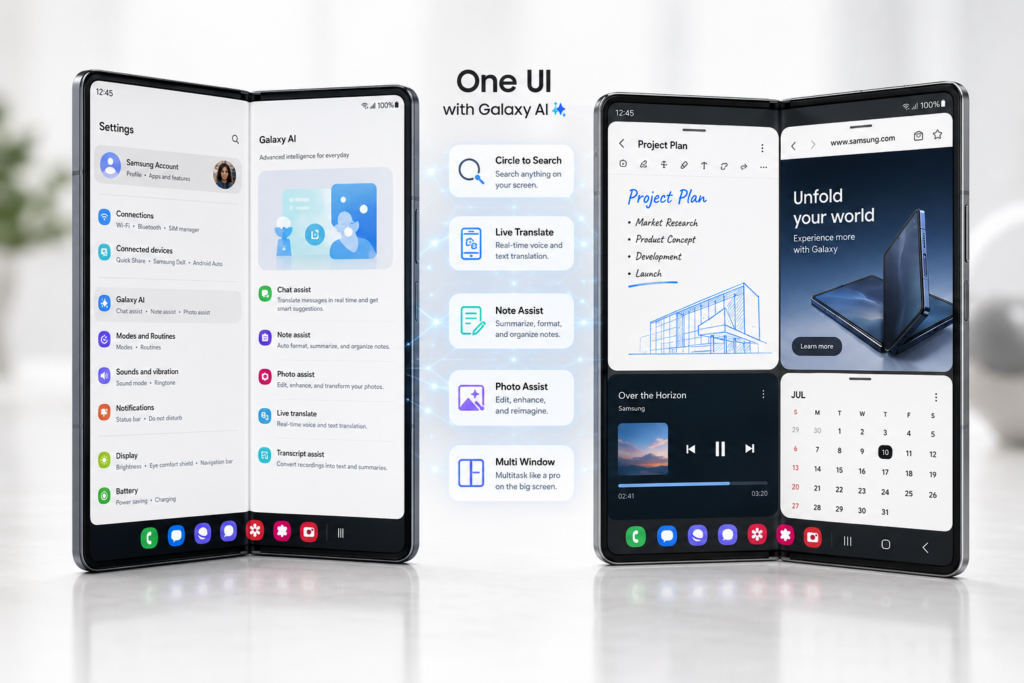
Both phones ship with Samsung’s latest One UI experience and Galaxy AI features.
Features include:
- Circle to Search
- Live Translate
- AI Writing Tools
- Note Assist
- Photo Assist
- Split-screen multitasking
- Multi-window productivity
Samsung also continues offering one of Android’s strongest software support policies, making either device a long-term investment.
Voltixaz Analysis
Samsung’s software ecosystem has become one of its biggest competitive advantages. Foldables now succeed because of software optimization—not simply because they fold.
Price and Value
| Buyer Type | Best Choice |
|---|---|
| First Foldable | Galaxy Z Fold 8 |
| Mobile Photographer | Galaxy Z Fold 8 Ultra |
| Business Professional | Either |
| Productivity User | Either |
| Content Creator | Z Fold 8 Ultra |
| Budget-Conscious Premium Buyer | Z Fold 8 |
The standard Fold 8 offers stronger value for most buyers.
The Ultra offers stronger hardware but at a significantly higher premium.
Voltixaz Analysis
This comparison isn’t about identifying the “best” phone—it’s about identifying the better investment. For many people, the Fold 8 delivers around 90–95% of the Ultra experience for substantially less money.
Pros & Cons
Galaxy Z Fold 8
Pros
- Lower price
- Excellent performance
- Premium foldable experience
- Same software features
- Strong multitasking
Cons
- Cameras not as advanced
- Slightly less premium materials
- Fewer flagship-exclusive features
Galaxy Z Fold 8 Ultra
Pros
- Best cameras
- Premium construction
- Enhanced display
- Better creator-focused features
- Ultimate Samsung foldable
Cons
- Expensive
- Incremental upgrades for casual users
- Diminishing returns compared to Fold 8
Who Should Buy?
Choose the Galaxy Z Fold 8 if you:
- Are buying your first foldable.
- Want flagship productivity without paying the Ultra premium.
- Prioritize value over the absolute best camera hardware.
- Mostly use your phone for multitasking, entertainment, and work.
Choose the Galaxy Z Fold 8 Ultra if you:
- Regularly shoot photos and videos for work or social media.
- Want Samsung’s most advanced foldable regardless of price.
- Prefer premium materials and the highest-end display experience.
- Plan to keep the phone for several years and want the top specification available.
Who Should Skip?
You may want to skip both if:
- You rarely multitask on your phone.
- You prefer compact devices.
- You primarily care about battery life.
- A traditional flagship already meets your needs.
Expert Tips
- Don’t buy the Ultra solely for benchmark numbers; both devices deliver flagship-level performance.
- If you’re upgrading from a Z Fold 7, compare the camera and software improvements carefully before spending more.
- Factor in the cost of Samsung Care+, a case, and accessories when comparing total ownership costs.
- If productivity is your priority, invest in accessories like the S Pen and DeX-compatible peripherals to maximize the foldable experience.
Samsung’s decision to split its foldable lineup makes sense because not every buyer wants—or needs—the most expensive model.
The Galaxy Z Fold 8 is likely to be the smarter purchase for the majority of users. It delivers nearly all of Samsung’s foldable software experience, flagship performance, and multitasking capabilities at a more accessible price.
The Galaxy Z Fold 8 Ultra justifies its premium through better cameras, finer build quality, and additional refinements aimed at professionals, creators, and enthusiasts. Those upgrades are meaningful, but they aren’t essential for everyone.
If value is your priority, the Fold 8 is the stronger recommendation. If you want Samsung’s most capable foldable and are comfortable paying extra for incremental improvements, the Fold 8 Ultra is the better fit.
Frequently Asked Questions
1. What’s the biggest difference between the Galaxy Z Fold 8 and Z Fold 8 Ultra?
The largest differences are expected to be the camera system, premium materials, display refinements, and a handful of Ultra-exclusive features.
2. Is the Galaxy Z Fold 8 Ultra worth the extra money?
It depends. If photography, premium hardware, and long-term ownership are priorities, the extra cost may be justified. Otherwise, the standard Fold 8 offers better overall value.
3. Do both phones support Galaxy AI?
Yes. Both include Samsung’s Galaxy AI features, although the Ultra may receive additional software optimizations.
4. Which model is better for multitasking?
Both provide an excellent multitasking experience with split-screen support, DeX, and productivity tools.
5. Is battery life significantly different?
Not necessarily. Real-world battery life is expected to be similar, depending on usage patterns.
6. Which phone is better for photography?
The Galaxy Z Fold 8 Ultra is the stronger choice due to its upgraded camera hardware and image processing.
7. Is the Fold 8 a good first foldable?
Yes. It offers the core foldable experience without the higher price of the Ultra.
8. How many years of software updates do these phones receive?
Samsung typically provides several years of Android OS and security updates for its flagship devices. Check your regional support policy for the latest commitment.
9. Is the Ultra noticeably faster?
For everyday tasks, performance differences are likely to be minimal. The Ultra’s advantages are more apparent during sustained heavy workloads.
10. Which phone offers better value?
For most buyers, the Galaxy Z Fold 8 provides the best balance of features and price.
Internal Link Suggestion
- AI News →
/artificial-intelligence/ - Tech News →
/tech-news/ - Reviews →
/reviews-buying-guides/