AI Job Market Why Tech Jobs Are Falling
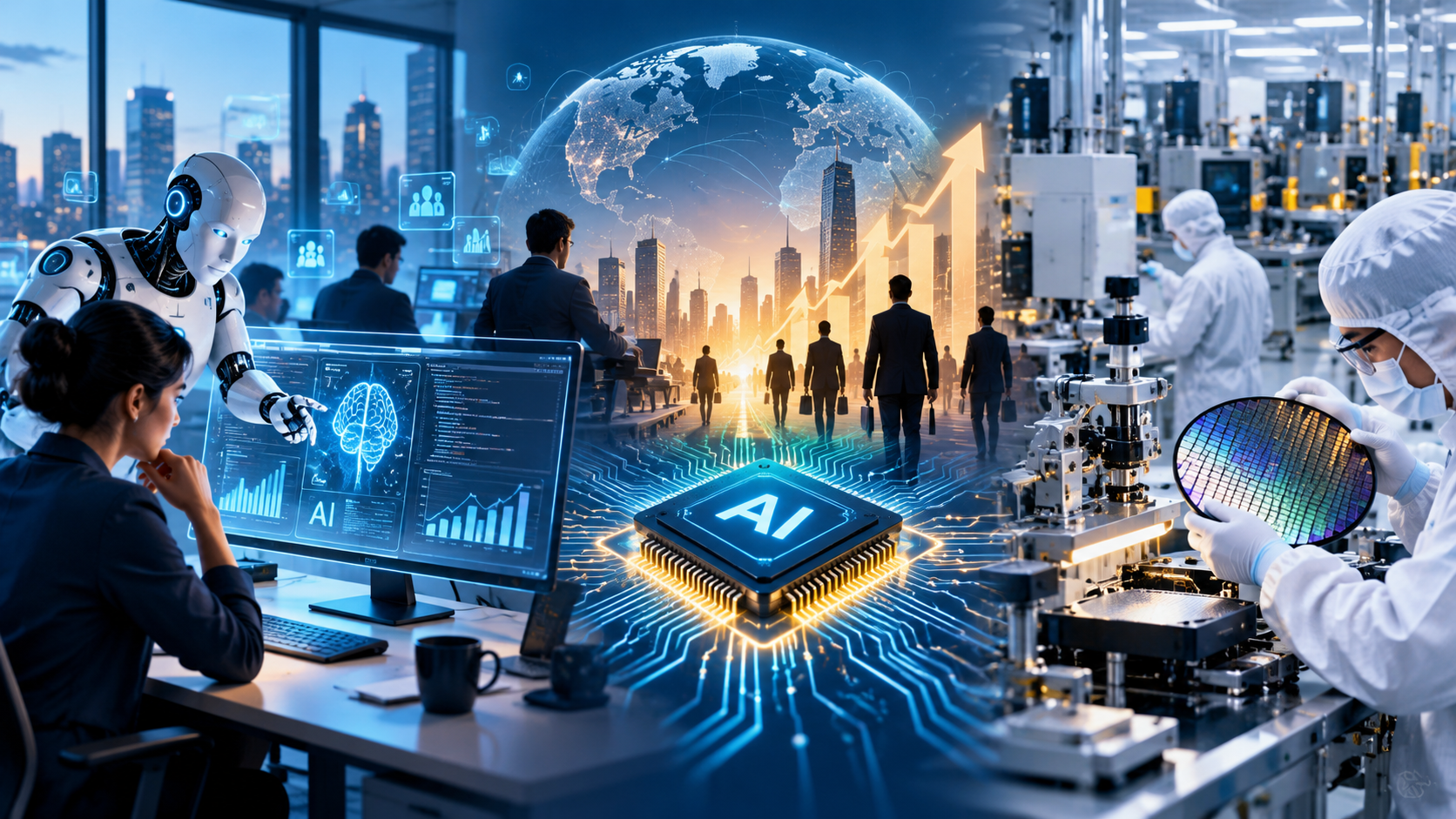
Artificial intelligence is no longer just changing how people work—it is beginning to reshape what kinds of jobs exist in the first place.
Over the past few years, businesses have rapidly adopted AI tools to automate repetitive tasks, improve productivity, and reduce operational costs. As a result, hiring patterns across the technology industry are changing. While some software and administrative roles are experiencing slower growth, demand for semiconductor engineers, chip manufacturing specialists, robotics experts, and AI infrastructure professionals is accelerating. Recent U.S. labor-market data highlights this shift: technology hiring has softened in some areas while semiconductor manufacturing and other AI-related industrial jobs have expanded. The Times of India
Rather than signaling the end of technology careers, this transformation represents a significant evolution of the global workforce. AI is replacing certain tasks, but it is also creating entirely new industries that require different skills.
The AI Revolution Is Changing Hiring Priorities
For decades, software development was one of the fastest-growing professions worldwide. Companies hired thousands of developers, testers, customer support representatives, and data entry specialists to build and maintain digital products.
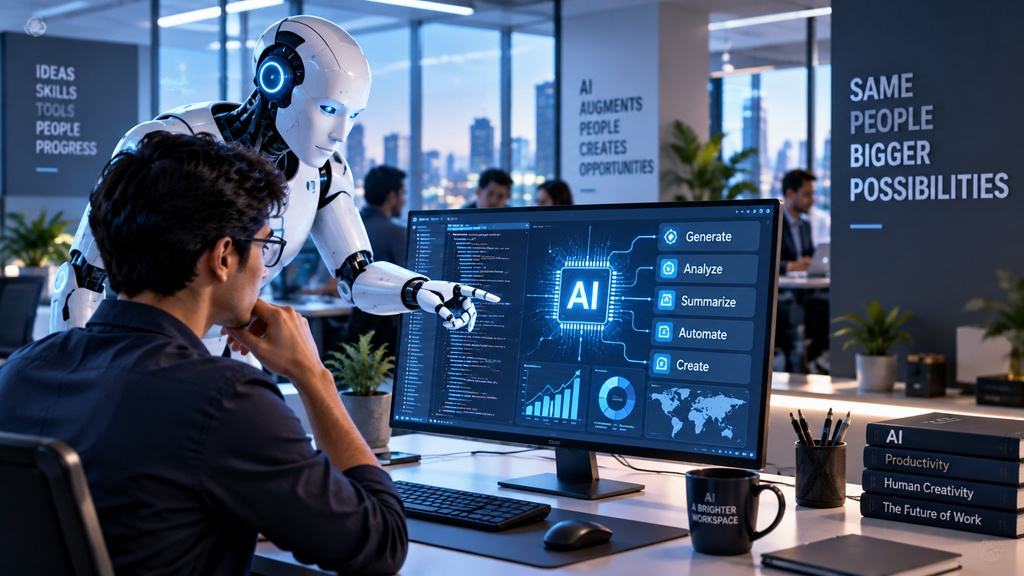
Today, AI-powered tools are helping employees complete many of these tasks faster than ever before.
Modern AI systems can:
- Generate software code
- Write documentation
- Analyze large datasets
- Answer customer questions
- Create marketing content
- Automate repetitive office workflows
Because employees can accomplish more in less time, many organizations are becoming more selective in their hiring rather than continuously expanding their workforce. This does not mean AI has eliminated the need for skilled professionals; instead, employers increasingly prioritize workers who can collaborate effectively with AI technologies. Research also shows AI-related skills now appear in a large share of technology job postings, highlighting a shift in the skills employers seek rather than a simple reduction in hiring. Dice
AI Is Not Destroying Jobs—It Is Transforming Them
Headlines often suggest that AI is “taking jobs,” but the reality is more nuanced.
Throughout history, major technological innovations have changed the types of work people perform rather than eliminating work altogether.
The Industrial Revolution reduced manual labor while creating factory jobs.
The internet transformed retail but generated entirely new careers in software development, digital marketing, and e-commerce.
Artificial intelligence is following a similar pattern.
Instead of replacing entire professions, AI is automating specific tasks within those professions. This allows workers to focus on activities that require human judgment, creativity, communication, and decision-making. Economists continue to debate the pace of this transition, but many agree the labor market is being reshaped rather than simply reduced. MarketWatch
Why Chip Manufacturing Is Suddenly Booming
Every AI application depends on powerful computer chips.
Whether someone is using ChatGPT, generating AI images, training machine learning models, or operating autonomous vehicles, all of these technologies require advanced semiconductors.
As AI adoption accelerates, demand for high-performance processors has reached unprecedented levels.
This has triggered massive investments in:
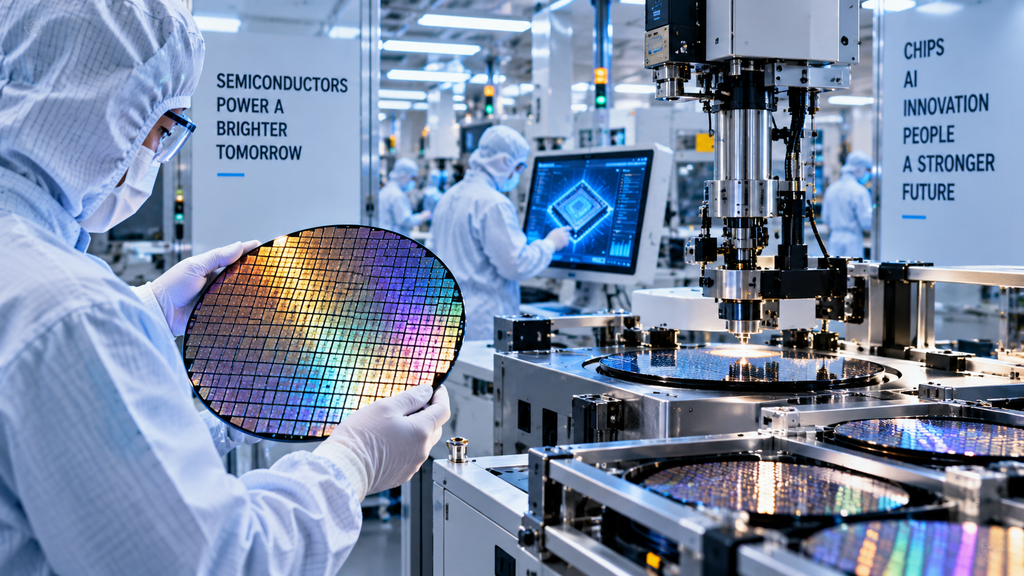
- Semiconductor fabrication plants
- Advanced packaging facilities
- AI data centers
- Robotics manufacturing
- Electronics supply chains
Governments and companies around the world are investing billions of dollars to strengthen domestic semiconductor production and reduce dependence on overseas supply chains. Industry groups estimate these investments will support hundreds of thousands of jobs across manufacturing, construction, and the broader economy. Semiconductor Industry Association
The New Jobs AI Is Creating
While some traditional office roles are evolving, entirely new career paths are emerging.
Growing professions include:
1. AI Engineers
Professionals who design, train, and improve artificial intelligence systems.
2. Machine Learning Specialists
Experts responsible for developing predictive models and intelligent software.
3. Semiconductor Engineers
Engineers who design next-generation processors powering AI applications.
4. Chip Manufacturing Technicians
Specialists who operate highly automated semiconductor fabrication facilities.
5. Robotics Engineers
Professionals developing industrial automation systems for factories.
6. Data Center Engineers
Experts maintaining the computing infrastructure required for AI workloads.
7. Cybersecurity Analysts
As AI becomes more widespread, protecting digital infrastructure becomes increasingly important.
These positions often require advanced technical skills but are expected to remain in high demand as AI adoption continues.
The Skills Employers Want in 2026 and Beyond
Success in tomorrow’s job market will depend less on performing repetitive tasks and more on solving complex problems.
Some of the most valuable skills include:
- Artificial Intelligence fundamentals
- Python programming
- Cloud computing
- Data analytics
- Semiconductor technology
- Cybersecurity
- Robotics
- Automation systems
- Critical thinking
- Communication
- Project management
Technical expertise alone is no longer enough. Employers increasingly value professionals who can combine domain knowledge with AI tools to improve productivity and make informed decisions.
Why This Matters for India
India has long been recognized as one of the world’s leading technology talent hubs.
However, AI is changing the country’s employment landscape as well.
Routine software development and outsourcing work may become more automated, but opportunities are expanding in higher-value fields such as AI engineering, semiconductor design, advanced manufacturing, and global capability centers. Industry experts also emphasize the need for large-scale upskilling to meet growing demand in these sectors. Financial Times
For students and professionals, continuous learning is becoming essential.
Workers who embrace AI tools are likely to remain competitive, while those relying solely on routine technical skills may face greater challenges.
The Global Semiconductor Race
The competition to dominate semiconductor manufacturing has become both an economic and geopolitical priority.
Countries including:
- United States
- China
- Taiwan
- South Korea
- Japan
- India
- Germany

are investing heavily in semiconductor production.
These investments are not only about creating jobs but also about national security, technological leadership, and supply-chain resilience.
As AI demand continues to grow, semiconductors have become one of the world’s most strategic industries.
Jobs Most Likely to Change
| Traditional Roles | Growing Opportunities |
|---|---|
| Data Entry | AI Engineering |
| Basic Technical Support | Machine Learning |
| Manual Software Testing | Robotics |
| Repetitive Coding | Semiconductor Design |
| Administrative Processing | Data Center Operations |
| Basic Customer Support | Cybersecurity |
The important point is that these traditional roles are not necessarily disappearing overnight. Many are evolving as AI handles routine work while humans focus on more complex responsibilities.
What Students Should Learn Today
Students entering the workforce should not fear artificial intelligence.
Instead, they should prepare for a world where AI becomes a standard workplace tool.
Recommended areas of study include:
- Artificial Intelligence
- Data Science
- Semiconductor Engineering
- Cloud Computing
- Cybersecurity
- Robotics
- Electronics
- Embedded Systems
Equally important are communication, teamwork, adaptability, and problem-solving skills—qualities that remain difficult to automate.
The Future of Work Is Human Plus AI
Artificial intelligence is unlikely to replace every job, but it will continue changing how work gets done.
Companies are increasingly looking for employees who can use AI effectively rather than compete against it.
At the same time, the rapid expansion of semiconductor manufacturing, AI infrastructure, and advanced computing is opening new opportunities in engineering, manufacturing, and high-tech industries.
The future job market will belong to people who combine technical expertise with creativity, adaptability, and lifelong learning.
Rather than asking whether AI will replace workers, a more useful question is: How can workers use AI to become more valuable?
The answer to that question will define the next generation of careers.
Frequently Asked Questions
1. Is AI replacing software engineers?
AI is automating some coding and repetitive development tasks, but software engineers remain in demand, especially those with AI, cloud, cybersecurity, and systems expertise.
2. Why are semiconductor jobs increasing?
The global expansion of AI, cloud computing, and data centers has created strong demand for advanced chips, driving investment in semiconductor manufacturing facilities and related jobs.
3. Which careers are growing because of AI?
AI engineering, machine learning, cybersecurity, semiconductor design, robotics, cloud computing, and data engineering are among the fastest-growing technology fields.
4. Should students still learn programming?
Yes. Programming remains a valuable skill, but pairing it with AI literacy, data analysis, and problem-solving abilities will improve long-term career prospects.
5. Will AI eliminate all technology jobs?
No. Most evidence suggests AI is changing the nature of work by automating certain tasks while creating demand for new skills and occupations. MarketWatch
Internal Links
- AI News →
/artificial-intelligence/ - Tech News →
/tech-news/ - Reviews →
/reviews-buying-guides/