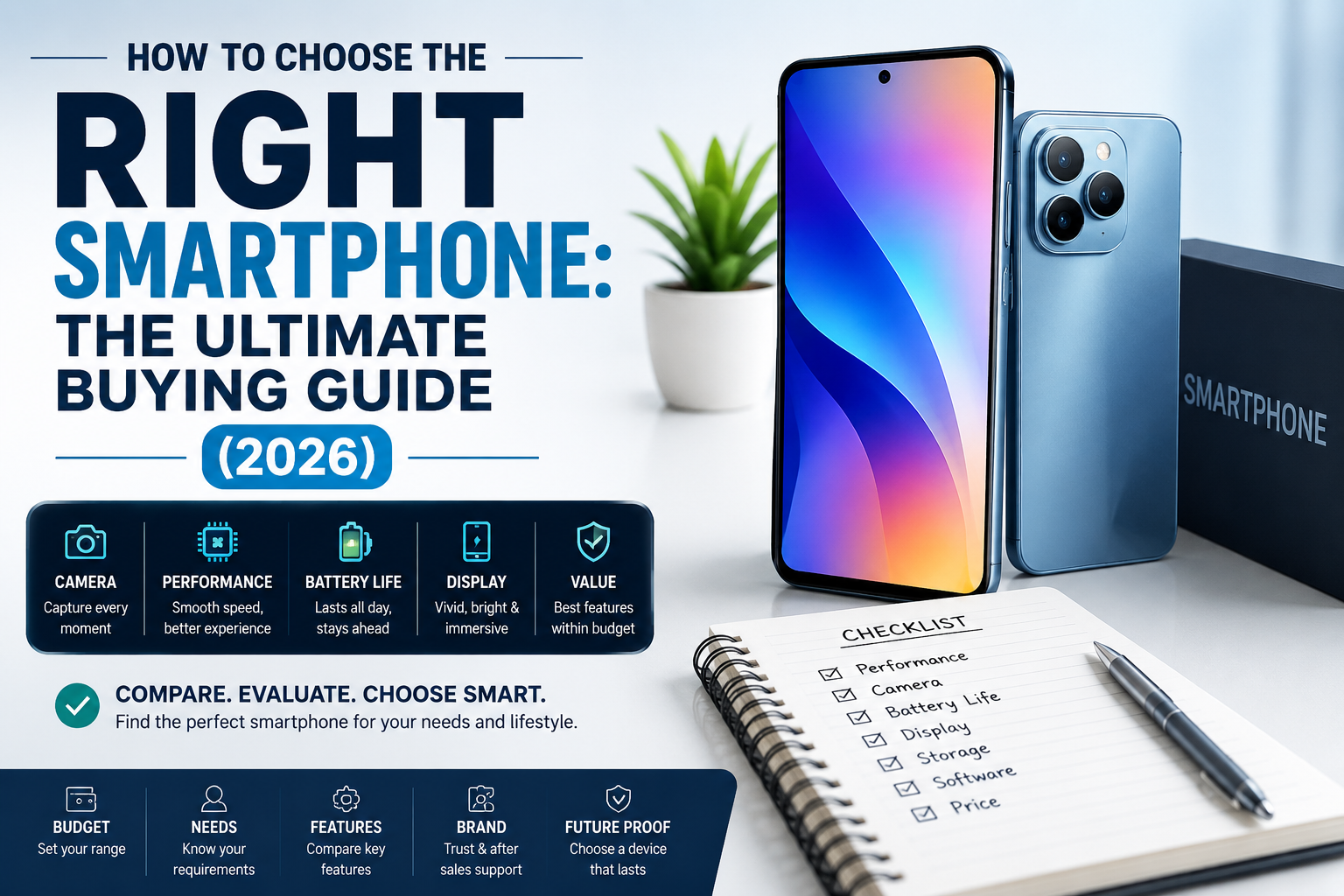
How to Choose the Right Smartphone: The Ultimate Buying Guide
Buying a smartphone today is more challenging than ever. With hundreds of models from brands like Apple, Samsung, Google, OnePlus, Xiaomi, Motorola, and Nothing, finding the right device can feel overwhelming. Every manufacturer promises the best camera, fastest processor, and longest battery life—but which features actually matter?
The truth is that the best smartphone isn’t necessarily the most expensive one. It’s the one that fits your lifestyle, budget, and daily needs.
Whether you’re a student, professional, gamer, content creator, or someone who simply wants a reliable phone, this guide will help you choose the perfect smartphone.
1. Start with Your Budget
Before comparing specifications, decide how much you’re willing to spend.
Budget Smartphones
- Affordable pricing
- Good battery life
- Decent cameras
- Ideal for students and casual users
Mid-Range Smartphones
- Excellent performance
- Better cameras
- AMOLED displays
- Faster charging
Flagship Smartphones
- Premium build quality
- Best cameras
- Top-tier processors
- Advanced AI features
- Long software support
Tip: Buy the best phone you can comfortably afford instead of paying extra for features you’ll rarely use.
2. Choose the Right Operating System
The operating system affects your overall experience.
Android
Android offers:
- More customization
- Wide range of price options
- Expandable storage on some models
- Variety of brands
Best for users who enjoy flexibility.
iOS
iPhones provide:
- Smooth performance
- Excellent security
- Long software updates
- Strong ecosystem with other Apple devices
Best for users who want simplicity and long-term support.
3. Processor Matters More Than Megapixels
The processor determines how fast your phone feels.
A powerful processor improves:
- Gaming
- Multitasking
- Camera processing
- Battery efficiency
- App performance
Avoid buying a phone solely because it has a high-megapixel camera if the processor is outdated.
4. How Much RAM Do You Need?
4 GB RAM
Basic usage:
- Calling
- Social media
6 GB RAM
Suitable for:
- Most users
- Light gaming
- Everyday multitasking
8 GB RAM
Great for:
- Gaming
- Content creation
- Heavy multitasking
12 GB or More
Best for:
- Power users
- Video editing
- Professional workloads
5. Storage: Think Long Term
Smartphones fill up quickly with photos, videos, and apps.
Recommended storage:
- 128 GB: Most users
- 256 GB: Heavy users and gamers
- 512 GB or more: Professionals and creators
If the phone doesn’t support a microSD card, buying more internal storage upfront is usually worth it.
6. Don’t Judge a Camera by Megapixels Alone
A 200 MP camera doesn’t automatically take better photos than a 50 MP camera.
Consider:
- Sensor size
- Image processing
- Optical Image Stabilization (OIS)
- Low-light performance
- Video quality
- Front camera quality
If photography is important, look for real-world camera reviews rather than relying on megapixel numbers.
7. Battery Life
Battery capacity is measured in milliamp-hours (mAh), but optimization matters just as much.
General guidelines:
- 4,500 mAh: Good
- 5,000 mAh: Excellent
- 6,000 mAh: Heavy usage
Also check:
- Fast charging speed
- Wireless charging
- Reverse wireless charging
8. Pick the Right Display
The display is the feature you’ll interact with the most.
LCD
- Affordable
- Good brightness
- Suitable for budget phones
AMOLED/OLED
- Rich colors
- Deep blacks
- Better contrast
- More power-efficient
For smoother scrolling and gaming, choose a display with a 90 Hz or 120 Hz refresh rate.
9. Build Quality
Consider how the phone feels and holds up over time.
Premium features include:
- Glass back
- Metal frame
- Gorilla Glass protection
- Water and dust resistance
- Strong durability
If you tend to drop your phone, invest in a quality case and screen protector.
10. Software Updates
Software support is often overlooked but is crucial for security and new features.
Choose brands known for:
- Regular updates
- Security patches
- Long-term OS upgrades
A phone with several years of software support is usually a better long-term investment.
11. Connectivity Features
Check that the phone includes:
- 5G support (if available in your region)
- Wi-Fi 6 or newer
- Bluetooth 5.x
- NFC (for contactless payments)
- USB-C charging
- Dual SIM support if needed
12. Which Smartphone Is Right for You?
Students
Look for:
- Affordable pricing
- Long battery life
- Good display
- Reliable performance
Office Professionals
Prioritize:
- Smooth multitasking
- Strong battery
- High-quality display
- Secure software updates
Gamers
Focus on:
- Powerful processor
- High refresh-rate display
- Effective cooling
- Large battery
Photographers and Creators
Choose a phone with:
- Excellent camera system
- Optical stabilization
- Strong video recording
- Plenty of storage
Travelers
Consider:
- Lightweight design
- Reliable battery life
- Water resistance
- Fast charging
Common Mistakes to Avoid
- Buying a phone based only on megapixels.
- Ignoring software support.
- Choosing insufficient storage.
- Overpaying for features you won’t use.
- Forgetting to check charging speed.
- Ignoring build quality and durability.
Frequently Asked Questions
What is the ideal RAM for a smartphone?
For most users, 6 GB to 8 GB provides a smooth experience. Heavy gamers and creators may benefit from 12 GB or more.
Is 128 GB storage enough?
Yes. For most people, 128 GB offers enough space for apps, photos, and videos. If you record lots of 4K video or download many games, consider 256 GB or higher.
Does a higher megapixel camera always take better photos?
No. Sensor quality, image processing, and stabilization are often more important than megapixel count.
Should I buy a 5G smartphone?
If you plan to keep your phone for several years and 5G is available in your area, it’s a good idea to choose a 5G-compatible model.
How often should I replace my smartphone?
Most quality smartphones last 3–5 years, depending on software support, battery health, and your performance needs.
Final Thoughts
Choosing the right smartphone isn’t about buying the most expensive model—it’s about finding the one that best matches your lifestyle. Start with your budget, then focus on the features that matter most to you, such as performance, camera quality, battery life, display, storage, and software support.
Taking the time to compare these factors will help you invest in a phone that delivers excellent value and remains reliable for years to come.
Related Articles
- iPhone 18 Pro Price Hike 2026: Is It Still Worth the Upgrade?
- Samsung Galaxy Z Fold 8 Ultra: Everything We Know Ahead of Unpacked London
- Top Rated Smartwatches Reviewed: Which One Is Worth Buying?
- Best Smart Rings 2026: Complete Buying Guide
- Complete Power Bank Buying Guide (2026): How to Choose the Best Power Bank for Your Needs