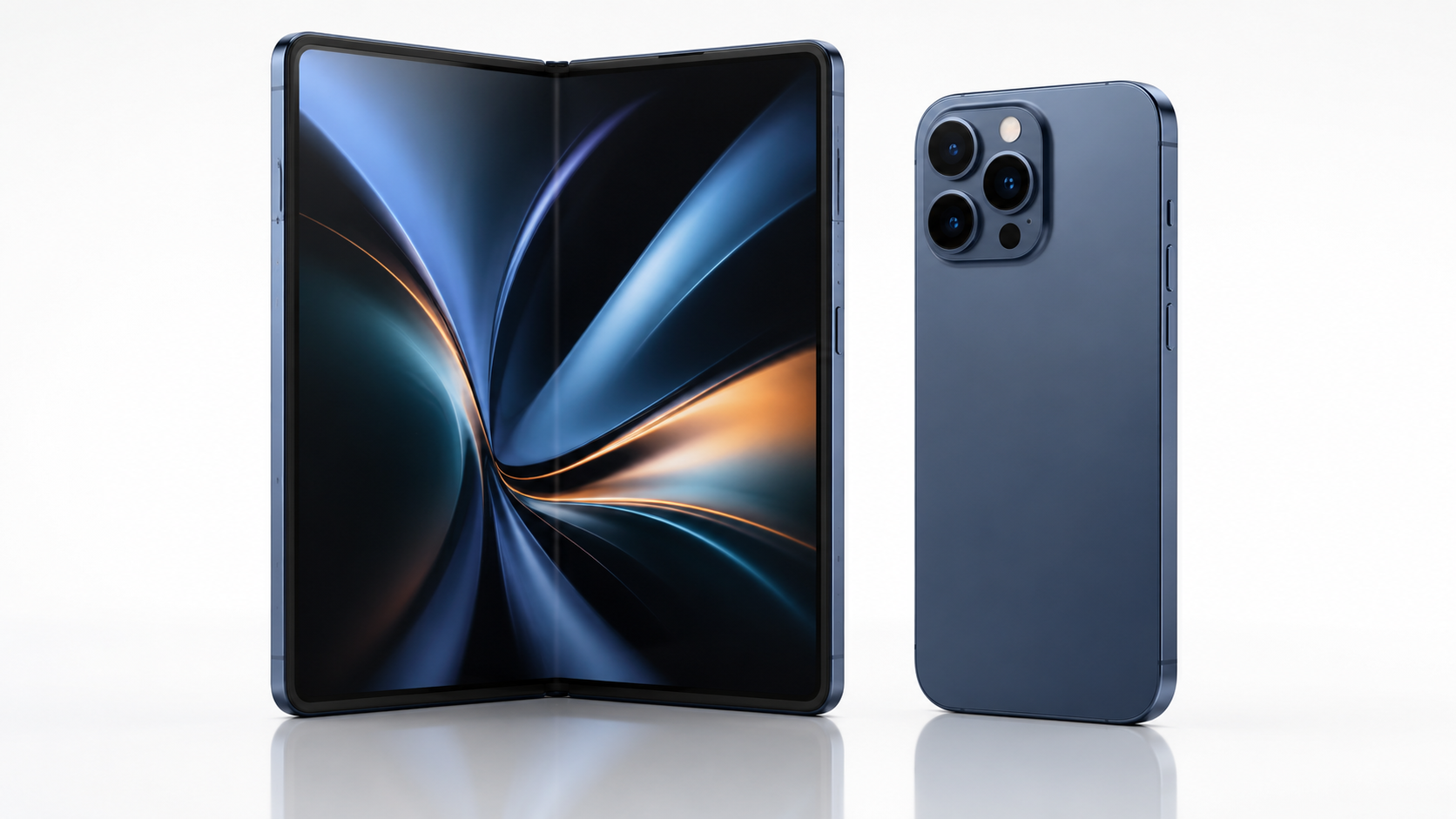
Samsung’s latest Galaxy Unpacked event has put foldable phones back in the spotlight, while Apple’s upcoming iPhone 18 Pro continues to dominate discussions through leaks and industry reports. That leaves many buyers asking an important question: should you buy Samsung’s newest foldable now or wait for Apple’s next flagship?
The answer isn’t as straightforward as comparing specifications. These phones target different priorities. One focuses on multitasking and productivity, while the other aims to refine the traditional premium smartphone experience.
In this comparison, we’ll break down their expected strengths, explain what has been officially confirmed versus what remains speculation, and help you decide which flagship better suits your needs.
Galaxy Z Fold 8 vs iPhone 18 Pro at a Glance
The Galaxy Z Fold 8 represents Samsung’s latest generation of foldable smartphones and is officially announced.
The iPhone 18 Pro, meanwhile, has not yet been officially unveiled. Information about the device currently comes from multiple industry analysts and supply-chain reports, although Apple’s final specifications remain unknown.
| Information | Galaxy Z Fold 8 | iPhone 18 Pro |
|---|---|---|
| Official Status | ✅ Official | ❌ Not yet announced |
| Form Factor | Foldable | Traditional flagship |
| Release | Confirmed | Expected later in 2026 |
| Information Reliability | High | Medium |
Voltixaz Analysis
Comparing these devices today requires balancing confirmed hardware against expected features. Samsung offers certainty—you know exactly what you’re buying. Apple’s device still carries uncertainty until launch, so purchasing decisions should reflect your urgency rather than speculation.
Design and Build Quality
Samsung continues refining its foldable design philosophy. The Galaxy Z Fold 8 is slimmer, lighter, and feels more mature than earlier Fold generations. Improvements to the hinge and reduced display crease make everyday use noticeably better.
The iPhone 18 Pro is expected to continue Apple’s premium titanium construction introduced in previous Pro models, with rumors suggesting smaller bezels and subtle ergonomic refinements rather than a complete redesign.
For users who frequently read documents, edit spreadsheets, or multitask between multiple apps, the Fold’s larger internal display changes how a smartphone is used. By contrast, the iPhone prioritizes one-handed usability, pocketability, and durability.
Source Status
| Claim | Status | Reliability |
|---|---|---|
| Galaxy Z Fold 8 design | Official | High |
| iPhone 18 Pro design changes | Rumored | Medium |
Voltixaz Analysis
Foldables have matured significantly, but they still appeal most to productivity-focused users. Apple’s conservative approach may seem less exciting, yet it often results in excellent durability and consistent user experience over several years.
Display Experience
Display technology is where these phones differ the most.
The Galaxy Z Fold 8 essentially provides two displays—a standard outer screen and a tablet-sized internal OLED display that dramatically changes media consumption and multitasking.
The iPhone 18 Pro is expected to feature one of Apple’s brightest and most color-accurate OLED panels with ProMotion refresh technology.
For gaming, watching videos, or editing documents, Samsung’s larger canvas offers advantages that traditional smartphones simply cannot match.
However, users who primarily browse social media, message friends, and take photos may not benefit enough to justify the Fold’s larger size.
Voltixaz Analysis
Screen size alone shouldn’t determine your purchase. Ask yourself how often you genuinely multitask on your phone. If the answer is “rarely,” the Fold’s biggest advantage may go largely unused.
Performance
Samsung equips the Galaxy Z Fold 8 with flagship hardware designed to handle demanding multitasking and Galaxy AI features.
The iPhone 18 Pro is widely expected to debut Apple’s next-generation A-series processor, continuing Apple’s strong reputation for single-core performance and long-term optimization.
Historically, Apple’s chips lead in efficiency and sustained performance, while Qualcomm-powered Android flagships have narrowed the gap considerably.
For most users, both phones will feel exceptionally fast.
Voltixaz Analysis
Raw benchmark numbers rarely translate into meaningful everyday differences. Software optimization, thermal management, and app quality have a much greater impact on long-term performance than synthetic scores.
Camera Comparison
Samsung focuses on versatility.
Its Fold lineup typically combines ultra-wide, telephoto, and high-resolution primary cameras while leveraging the large display for advanced editing and multitasking.
Apple traditionally emphasizes computational photography, color consistency, and video recording.
Although the iPhone 18 Pro’s camera system remains unofficial, industry reports suggest continued improvements in image processing and zoom capabilities rather than a dramatic hardware overhaul.
| Category | Galaxy Z Fold 8 | iPhone 18 Pro (Expected) |
|---|---|---|
| Photography | Excellent versatility | Excellent computational photography |
| Video | Very Good | Expected industry-leading |
| Portraits | Excellent | Excellent |
| Zoom | Strong | Expected improvement |
Voltixaz Analysis
Camera quality has reached a point where software matters more than megapixels. Buyers should consider whether they prioritize video creation, social media photography, or editing flexibility instead of focusing solely on specifications.
AI Features
Artificial intelligence has become a major differentiator.
Samsung’s Galaxy AI is already integrated across productivity, translation, note-taking, image editing, and search features.
Apple is expected to continue expanding Apple Intelligence capabilities throughout iOS, although feature availability often depends on supported regions and languages.
Confirmed vs Rumored
| Feature | Status |
|---|---|
| Galaxy AI | Official |
| Expanded Apple Intelligence | Expected |
Voltixaz Analysis
AI features are evolving rapidly. Buyers should evaluate what is available today rather than purchasing based solely on promised future capabilities.
Battery and Charging
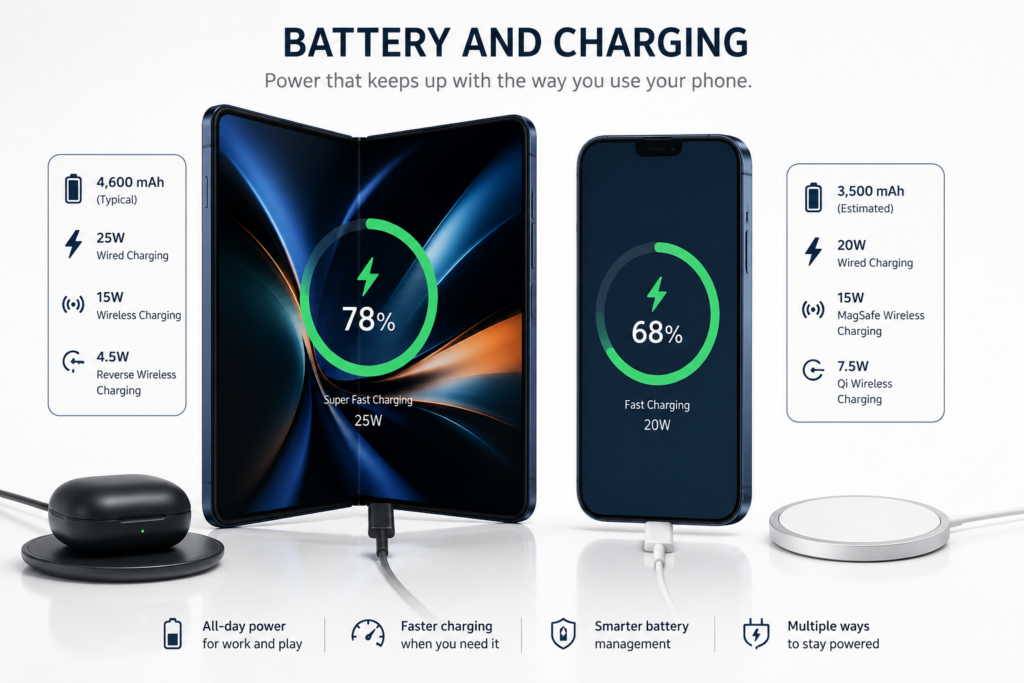
Foldable devices naturally require larger batteries because they power two displays.
Samsung continues improving efficiency, although battery endurance depends heavily on how frequently users keep the inner display active.
Apple traditionally prioritizes efficiency over battery capacity, often achieving competitive endurance through tight hardware and software integration.
Fast charging remains an area where many Android flagships still offer greater flexibility.
Voltixaz Analysis
Battery capacity alone doesn’t determine endurance. Display size, processor efficiency, and software optimization all play equally important roles.
Software and Long-Term Support
Samsung has significantly improved its software update commitment in recent years.
Apple, however, continues to lead the industry in long-term software support and ecosystem integration.
For users already invested in Apple products like Macs, iPads, or Apple Watch, the iPhone remains difficult to replace.
Similarly, Galaxy users with Samsung tablets, watches, and PCs gain meaningful ecosystem advantages.
Voltixaz Analysis
Switching ecosystems often costs more than switching phones. Accessories, cloud storage, purchased apps, and device integration should all influence your decision.
Price and Value
Foldables remain among the most expensive smartphones available.
The Galaxy Z Fold 8 commands a premium because it effectively combines a smartphone and compact tablet.
The iPhone 18 Pro is also expected to occupy the premium flagship segment but will likely remain significantly less expensive than Samsung’s foldable.
Voltixaz Analysis
The Fold offers exceptional value only if you regularly benefit from its larger display. Otherwise, a traditional flagship may deliver a better price-to-performance ratio.
Galaxy Z Fold 8 vs iPhone 18 Pro Comparison Table
| Feature | Galaxy Z Fold 8 | iPhone 18 Pro |
|---|---|---|
| Form Factor | Foldable | Traditional |
| Display | Dual OLED | OLED ProMotion |
| Productivity | ⭐⭐⭐⭐⭐ | ⭐⭐⭐⭐ |
| Gaming | ⭐⭐⭐⭐⭐ | ⭐⭐⭐⭐ |
| Cameras | Excellent | Expected Excellent |
| AI | Galaxy AI | Apple Intelligence (Expected) |
| Software Support | Excellent | Industry-leading |
| Ecosystem | Samsung | Apple |
| Value | Depends on use | Excellent flagship value |
Pros & Cons
Galaxy Z Fold 8
Pros
- Large multitasking display
- Excellent productivity features
- Mature foldable design
- Powerful Galaxy AI integration
Cons
- Premium price
- Heavier than conventional phones
- Foldable durability still evolving
iPhone 18 Pro
Pros
- Expected industry-leading performance
- Strong ecosystem
- Excellent long-term software support
- Premium build quality
Cons
- Not officially announced yet
- Less flexible multitasking
- Traditional design may feel familiar
Who Should Buy?
Choose the Galaxy Z Fold 8 if:
- You multitask frequently.
- You read, edit documents, or work from your phone.
- You want a tablet-like experience without carrying two devices.
Choose the iPhone 18 Pro if:
- You value long software support.
- You already use Apple’s ecosystem.
- You prioritize photography, video, and simplicity.
Who Should Skip?
Skip the Galaxy Z Fold 8 if you mainly browse social media, make calls, and occasionally watch videos. The additional cost may not provide meaningful benefits.
Skip the iPhone 18 Pro if you need desktop-like multitasking or frequently work with multiple apps simultaneously.
Expert Tips
- Don’t buy based solely on leaks.
- Consider your ecosystem before switching platforms.
- Foldables offer the greatest value for productivity users.
- Camera software often matters more than sensor size.
- Wait for official iPhone specifications if you’re undecided.
The Galaxy Z Fold 8 and iPhone 18 Pro represent two very different visions of a premium smartphone.
Samsung pushes innovation through foldable hardware, giving users more screen space and powerful multitasking capabilities.
Apple is expected to continue refining performance, software optimization, and ecosystem integration rather than reinventing the smartphone.
If productivity is your priority, the Galaxy Z Fold 8 is the more compelling choice today because its advantages are tangible and officially available.
If you prefer a refined flagship with long software support and seamless ecosystem integration, waiting for the iPhone 18 Pro could be worthwhile—provided Apple’s official announcement meets current expectations.
FAQs
1. Is the Galaxy Z Fold 8 better than the iPhone 18 Pro?
It depends on your priorities. Productivity users may prefer the Fold, while Apple ecosystem users may prefer the iPhone.
2. Has Apple officially announced the iPhone 18 Pro?
No. At the time of writing, Apple has not officially announced the device.
3. Which phone is better for multitasking?
The Galaxy Z Fold 8 offers a significantly larger workspace and supports advanced multitasking features.
4. Which has the better camera?
Samsung’s camera system is official, while Apple’s final camera specifications remain unconfirmed.
5. Is Galaxy AI better than Apple Intelligence?
Galaxy AI is already available. Apple’s latest AI capabilities are still expected to expand after launch.
6. Which phone is better for gaming?
Both should offer flagship performance, but the Fold’s larger display provides a more immersive gaming experience.
7. Are foldable phones durable enough?
Modern foldables are much more durable than early generations, although traditional smartphones generally remain simpler and more rugged.
8. Should I wait for the iPhone 18 Pro?
If you’re already considering Apple’s ecosystem and don’t need a new phone immediately, waiting for the official announcement is a reasonable choice.